


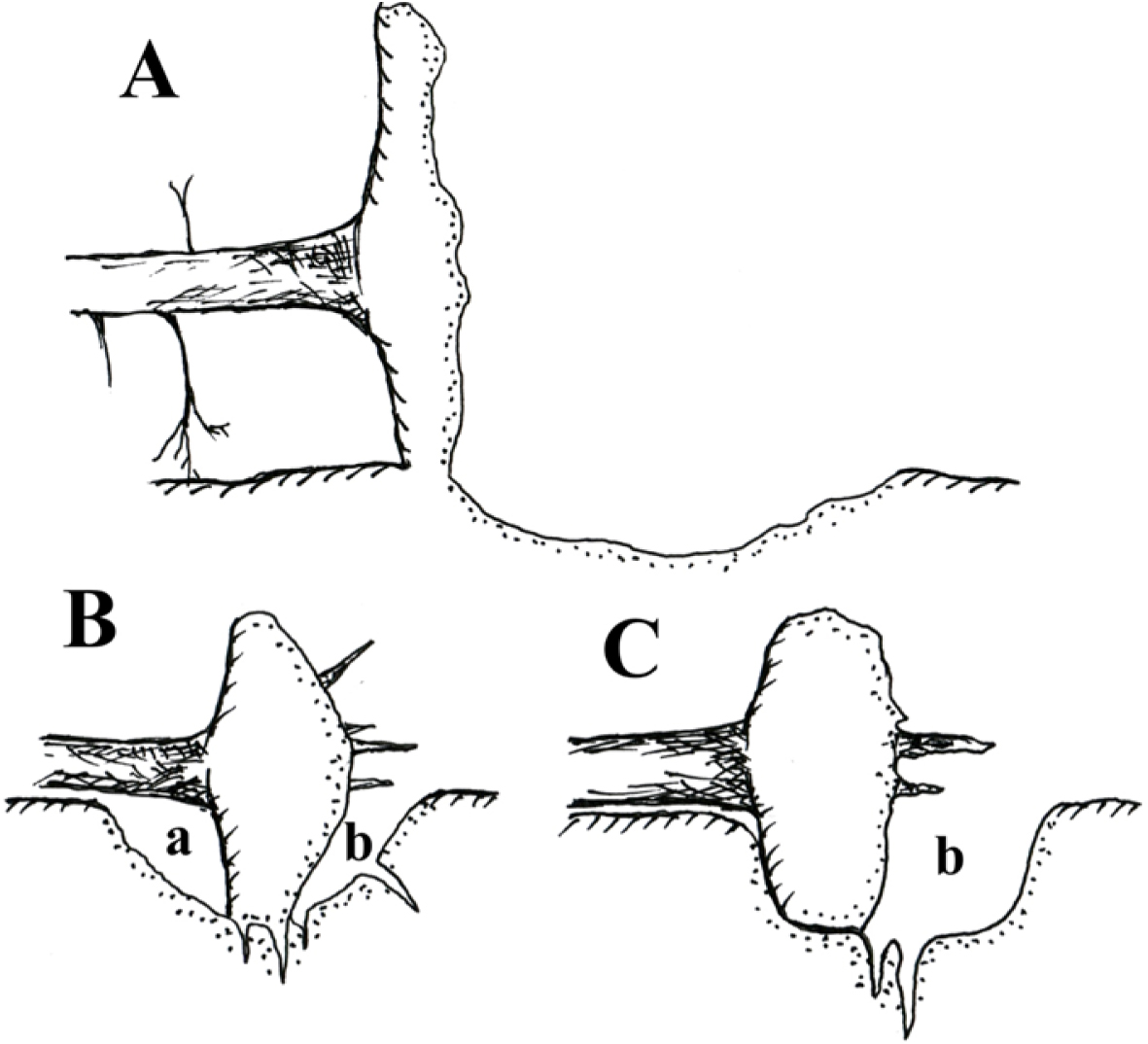
- Fig. 1. Hinge (A) and rotational (B, C) treefalls with uprooting: a the front and b the back parts of the pits
- Fig. 2. Hinge (A–C) and rotational (D–E) treefalls with uprooting: A – Picea abies (Kaluga region); B – Picea obovata (Ural Mountains, the Komi Republic); C – Fagus orientalis (Caucasus Mountains, Krasnodar region); D – Picea obovata (Ural Mountains, the Komi Republic); E – Abies nordmanniana (Caucasus mountains, Krasnodar region); F – Pinus sylvestris (Ural mountains, the Komi Republic); G – Acer platanoides (Kaluga region); H – Fraxinus excelsior (Kaluga region)
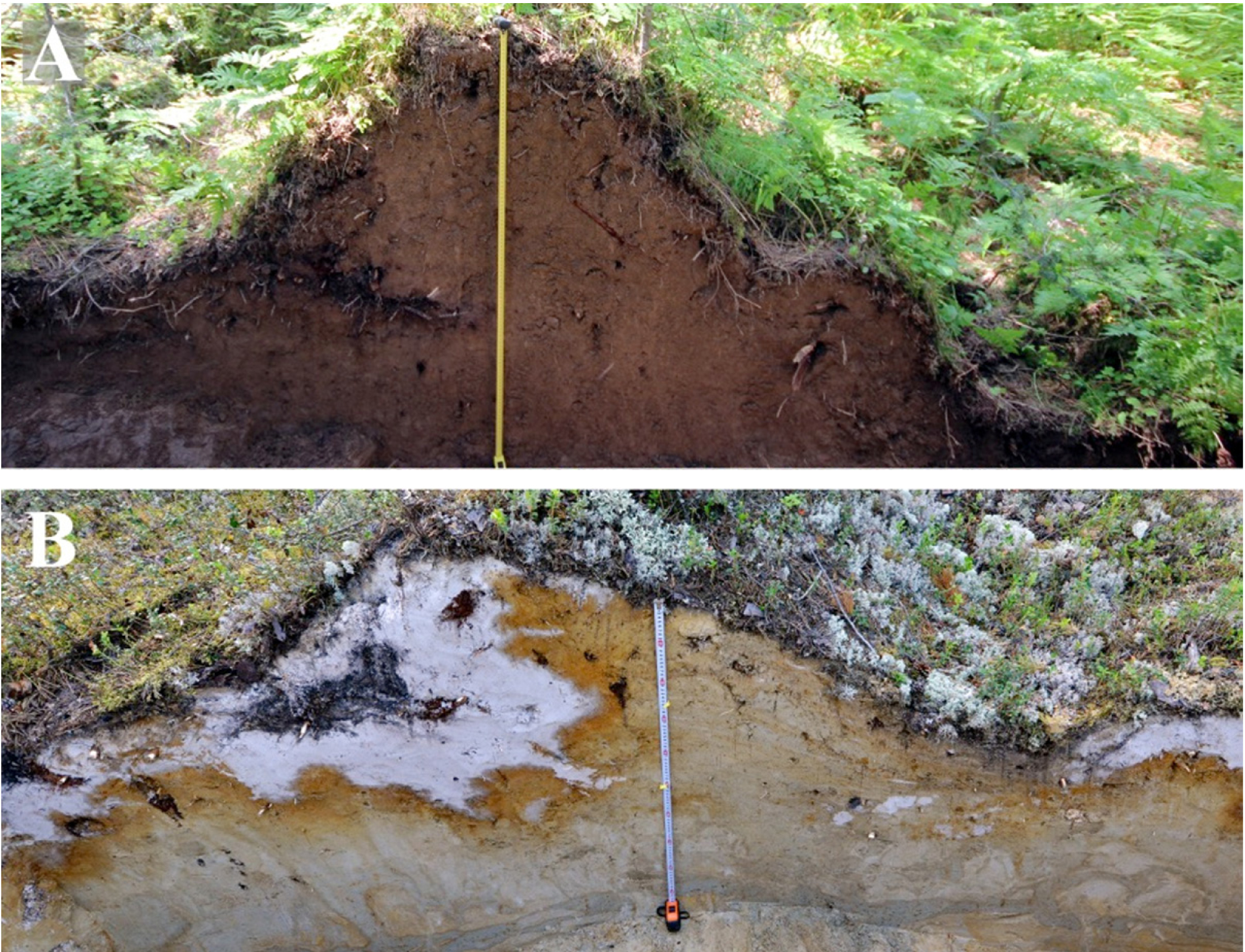
- Fig. 3. Old pit-and-mound complexes caused by hinge treefalls: A – Picea obovata, Haplic Cambisol (Ural Mountains, the Komi Republic); B – Pinus sylvestris, Haplic / Entic Podzol (Krasnoyarsk region)
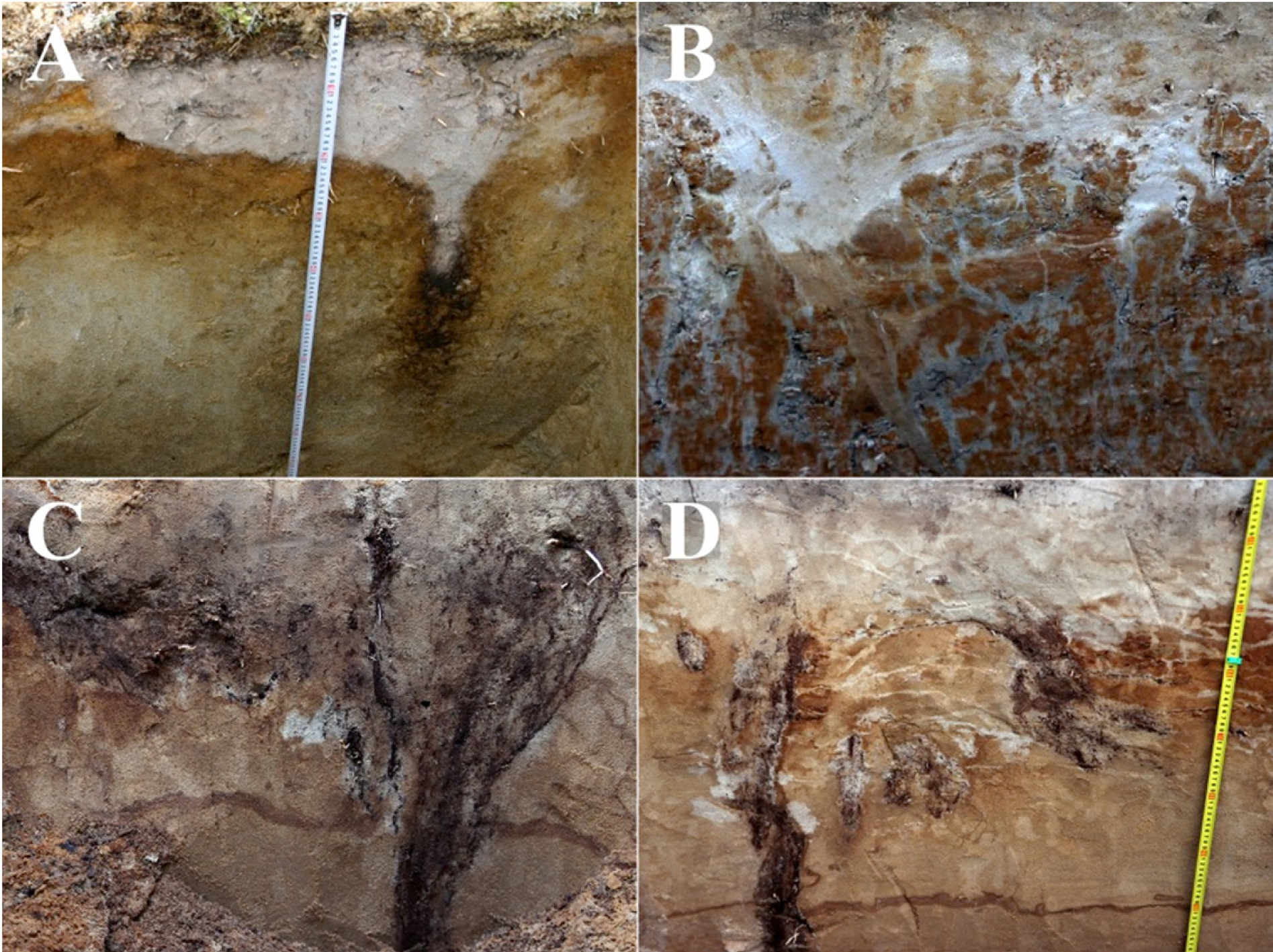
- Fig. 4. Patterns of old pits (cauldrons) caused by rotational treefalls in the soil profiles: А – Luvic Stagnic Phaeozem (Tomsk region); B, C – Luvic Phaeozems (Kaluga region); D – Albic Luvisol (Kaluga region)
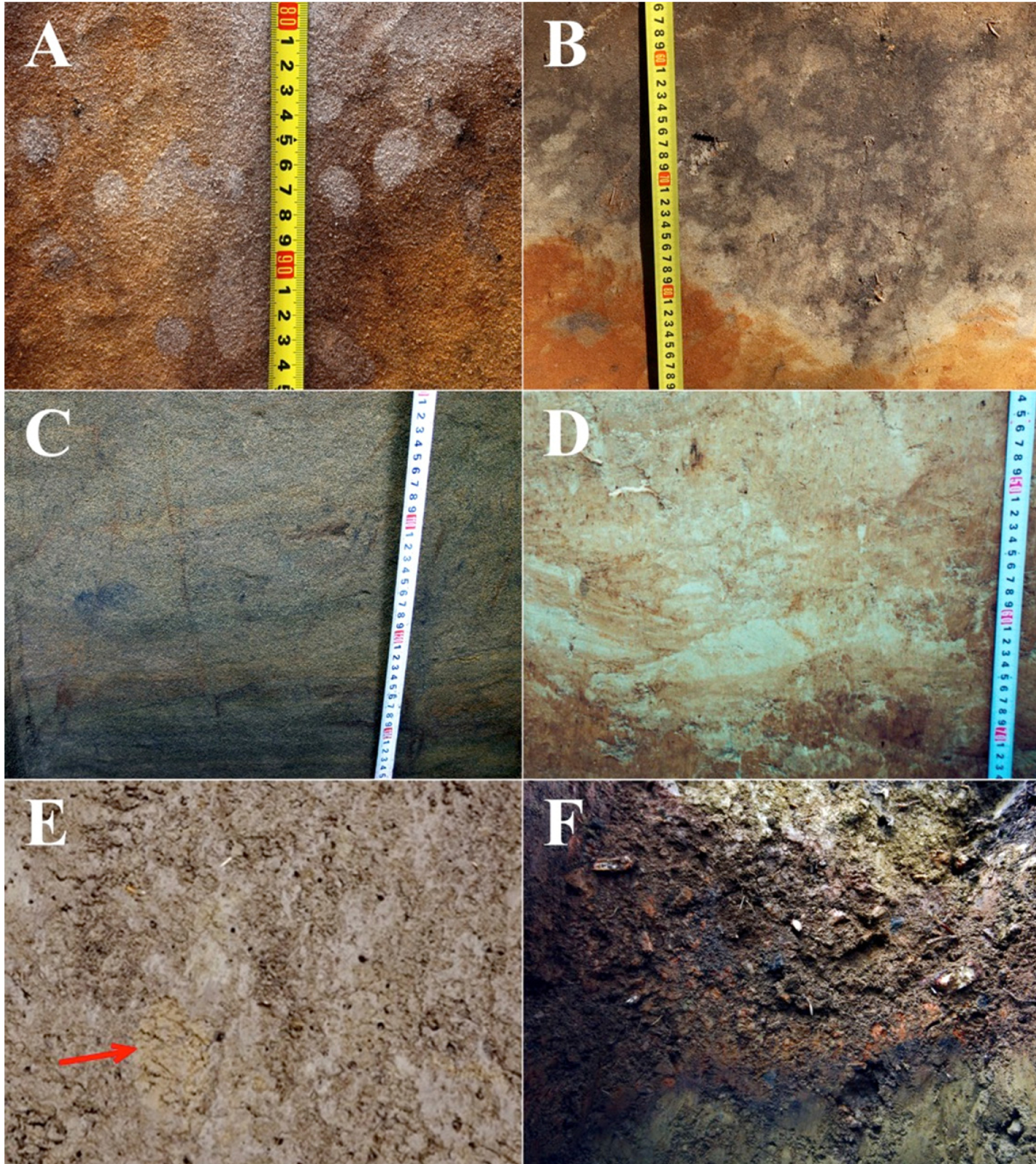
- Fig. 5. Spotty or streaky structures caused by treefalls in the soil profiles: A – Haplic Podzol, depth 80–95 cm (Kaluga region); B – Entic Podzol, 60– 90 cm (Kaluga region); C – Entic Podzol, 100– 135 cm (Krasnoyarsk region); D – Albic Luvisol, 45–70 cm (Kaluga region); E – Albic Stagnic Luvisols, 30–35 cm (Tomsk region); F – Histic Umbrisol, 20–60 cm (Caucasus Mountains, Krasnodar region)
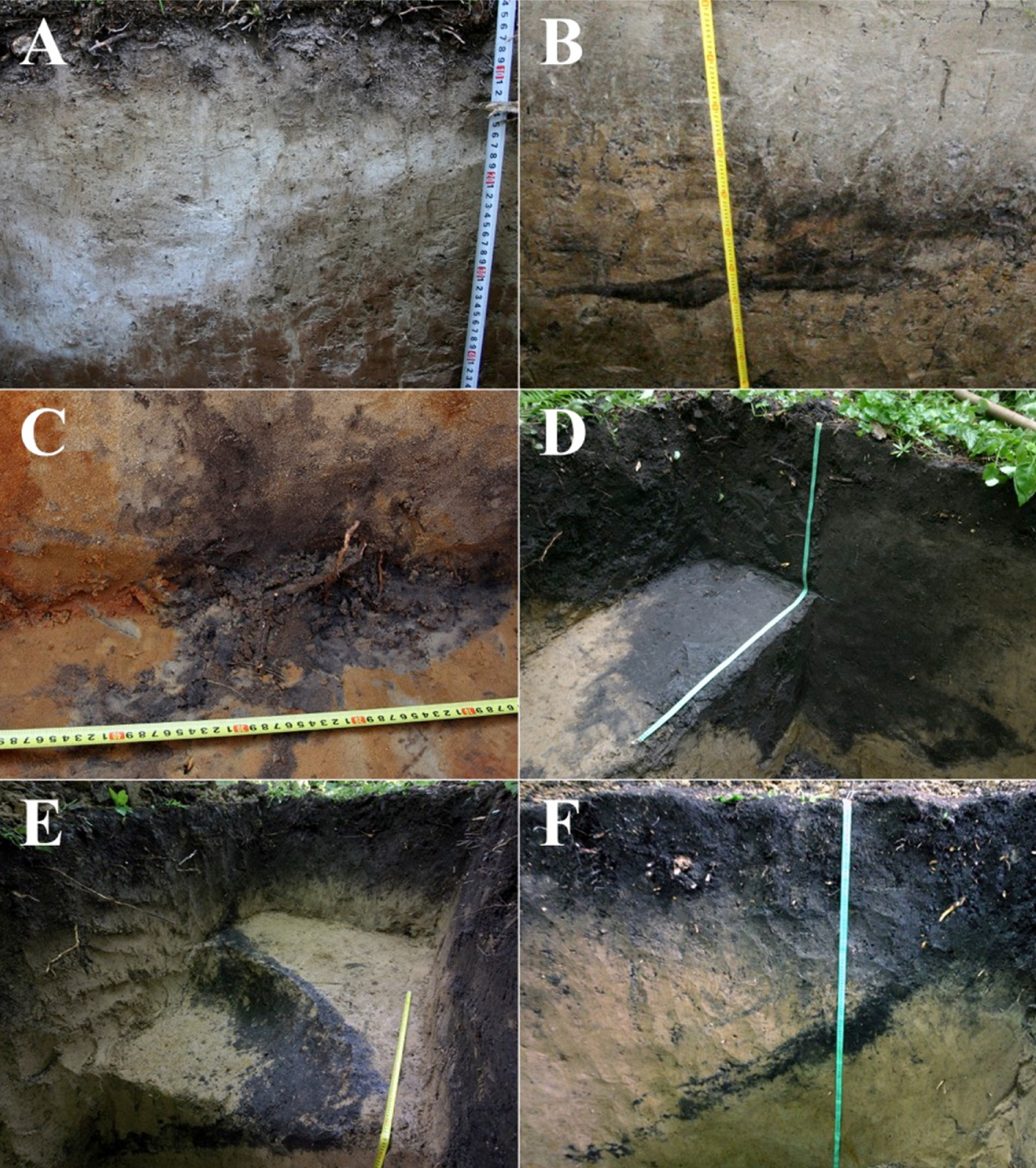
- Fig. 6. Blocks of albic (A) and humic (B–F) “buried material” in the old pits caused by rotational treefalls: A – the front part of the pit, depth 20–40 cm, Haplic Albeluvisol (Vologda region); B – the back part of the pit, 85–100 cm, Albic Luvisol (Tomsk region); C – the front part of the pit, 85–105 cm, Entic Podzol (Kaluga region); D – the front part of the pit, 40–120 cm, Luvic Phaeozems (Kaluga region); E, F – the back part of the pit, 40–100 cm, Luvic Phaeozems (Kaluga region)
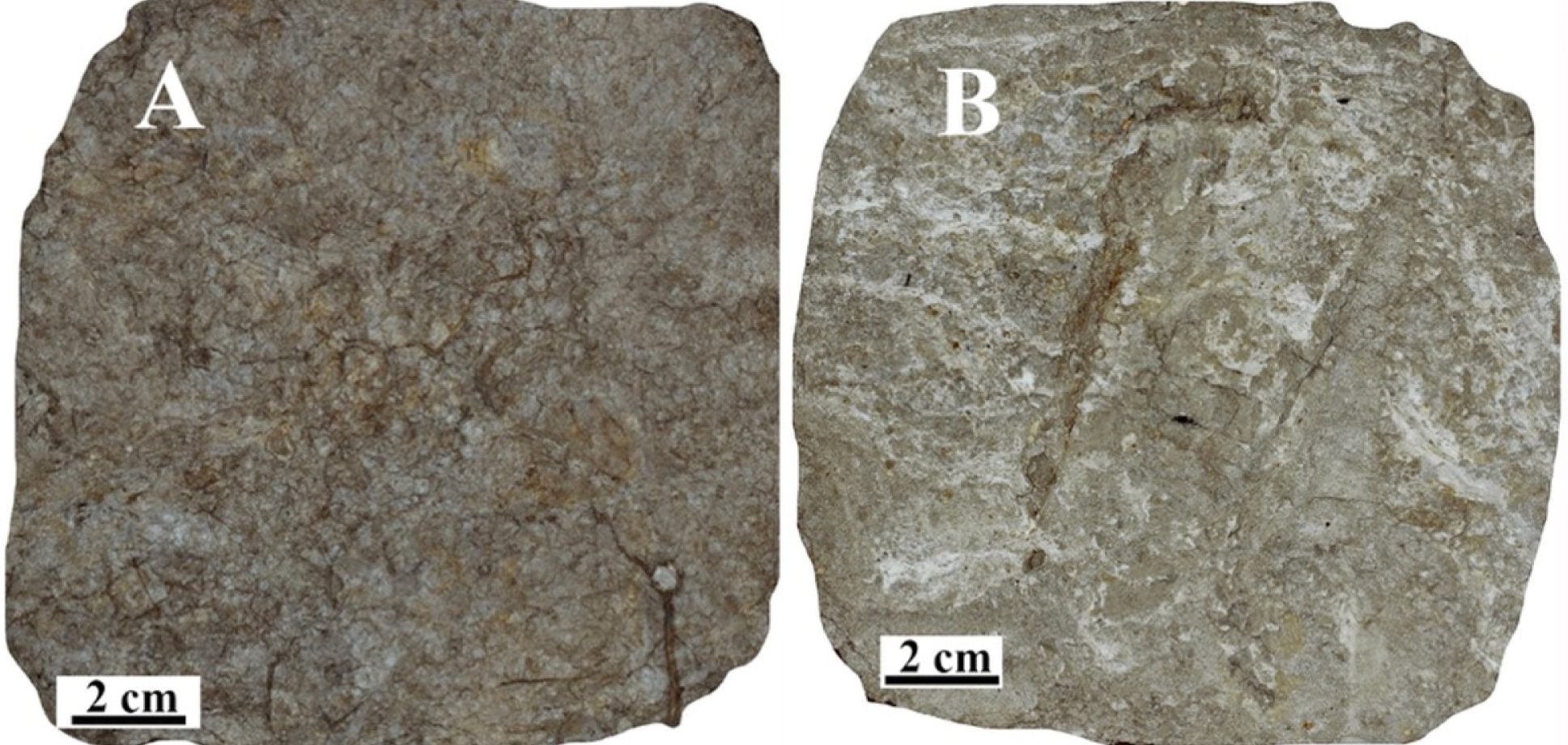
- Fig. 7. Washed (bleached) coarse-grained sediments in the old pits caused by treefalls of Abies sibirica: A – Luvic Stagnic Phaeozem (Endoclayic), depth 25–35 cm; B – Luvic Stagnic Phaeozems (Clayic), 45–50 cm (both in Tomsk region)
- Fig. 8. Soil fragments from neighbour plots in the same depth: A – background soil without treefall signs; B – streaky structures by coarse-grained sediments in the old pit caused by treefalls of Abies sibirica (Tomsk region)
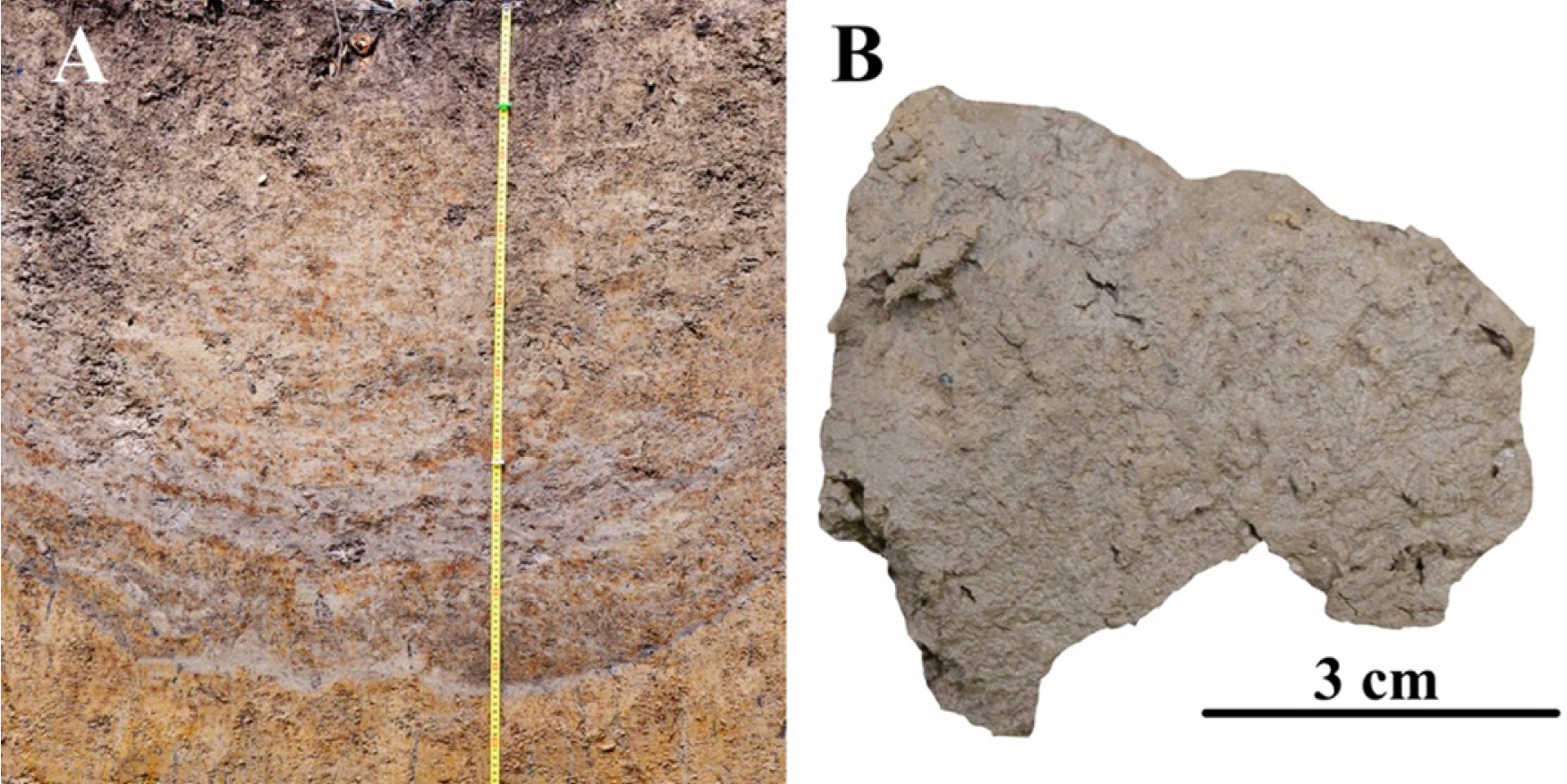
- Fig. 9. Hydrogenous changes of soil material: A – gley matter in the old (60–70 years old) pit caused by rotational treefall; B – structural degradation of soil aggregates because of gleization in the pit. Both Albic Stagnic Luvisol (Endoclayic, Episiltic), Tomsk region
- Fig. 10. Root channels with different deposits associated with the bottom boundary of the old pits: A – Haplic Podzol (the Komi Republic); B – Albic Luvisol (Clayic) (Tula region); C, D – Entic Podzol (Ryazan region)
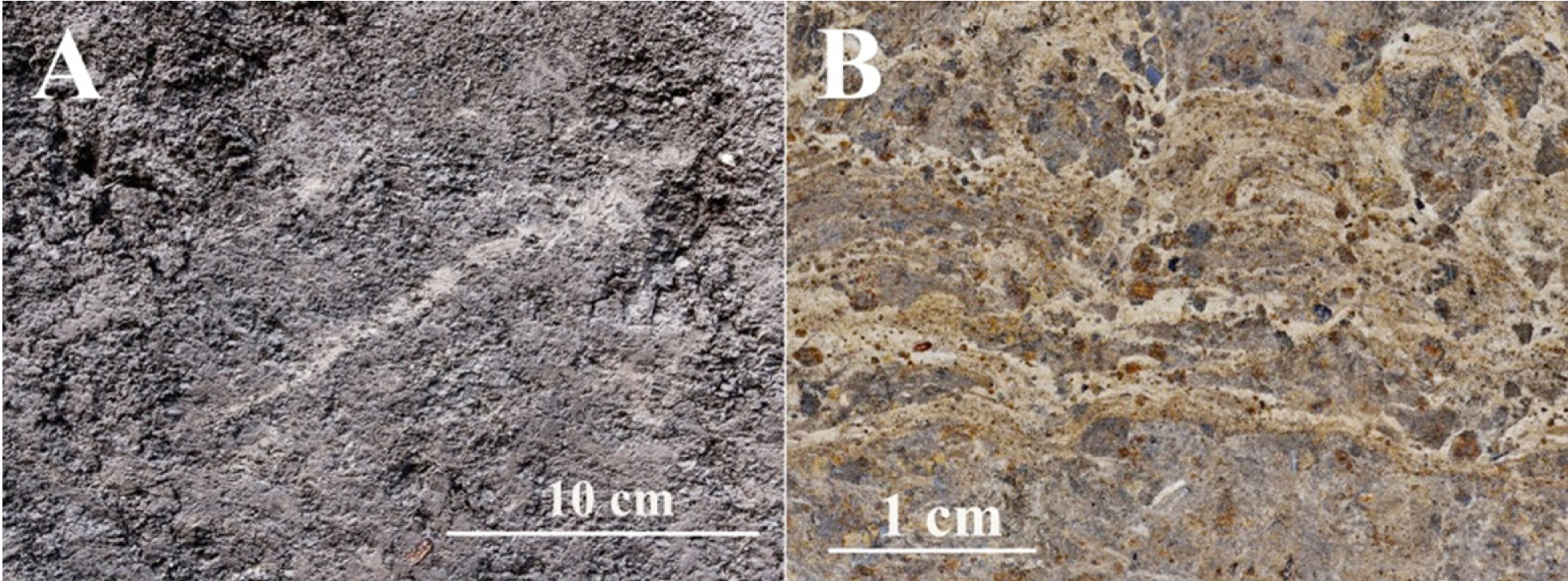
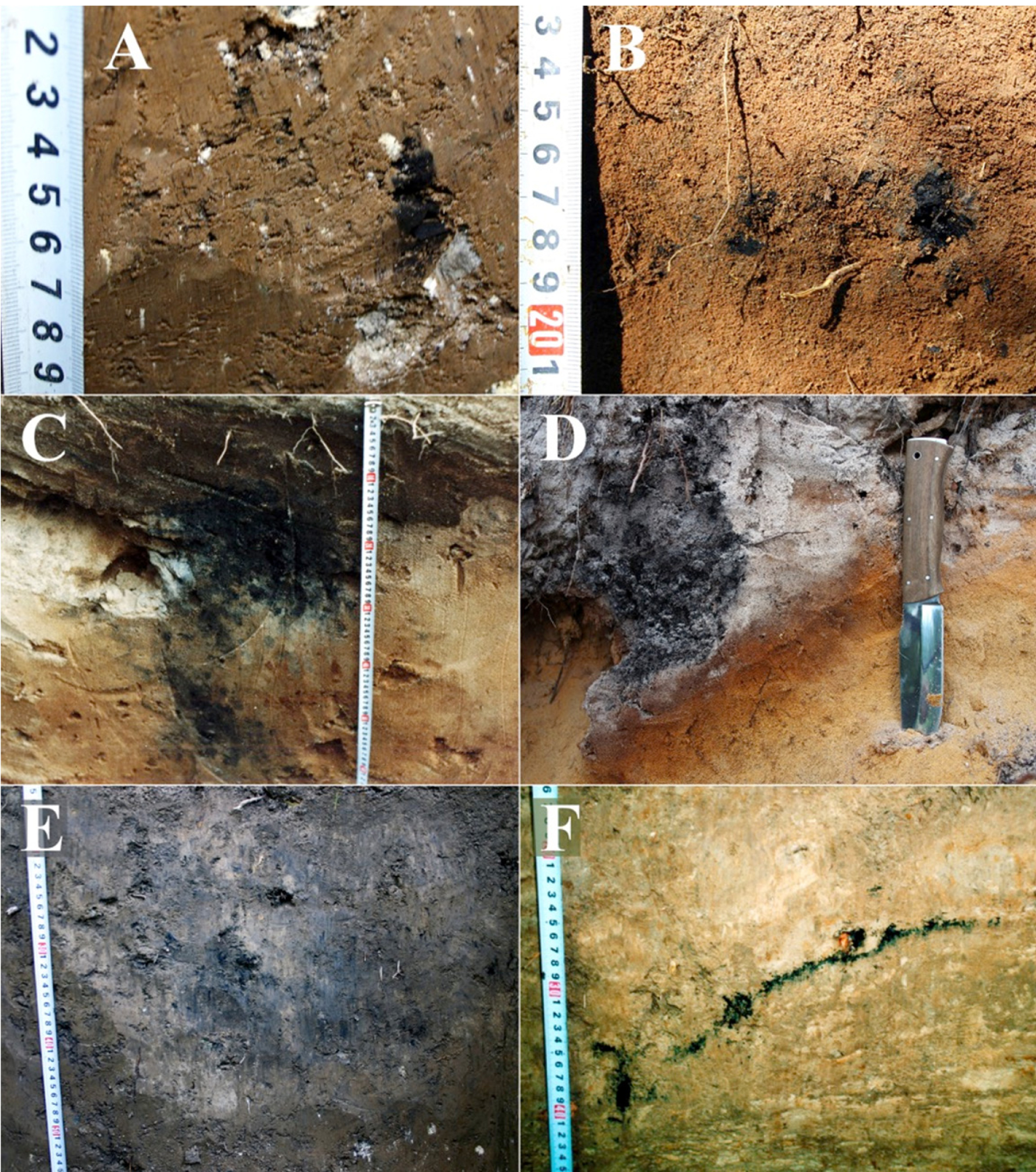
- Fig. 11. Charcoal displaced by treefalls in the soil: single (A, B), aggregation (C–F) and “buried layer”: А – Calcic Luvisol (Vologda region); B – Entic Podzol (Krasnoyarsk region); C – Brunic Arenosol (Kaluga region); D – Haplic Podzol (the Komi Republic); E – Albic Luvisol (Vologda region); F – Haplic Fluvisol (Kaluga region)
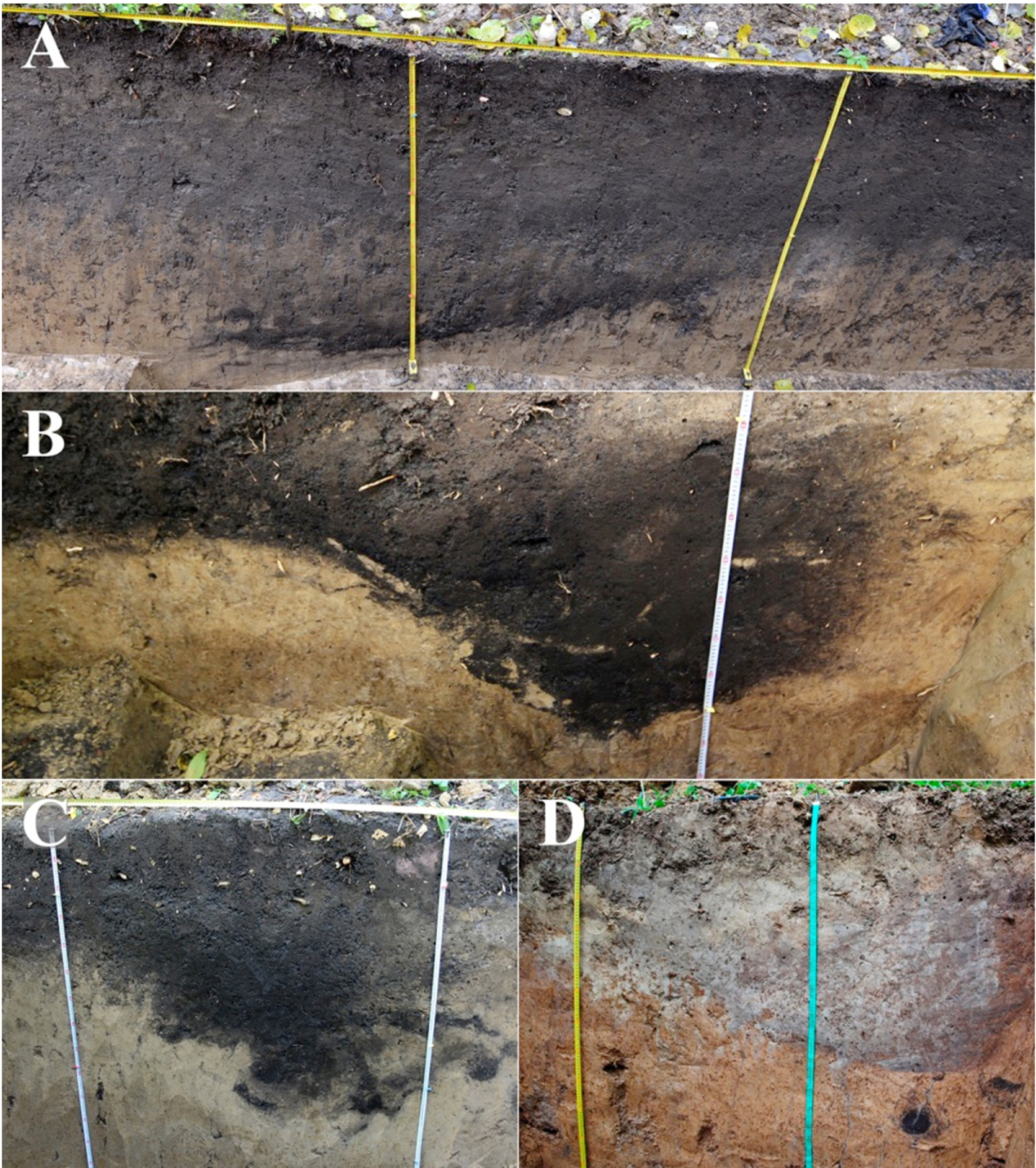
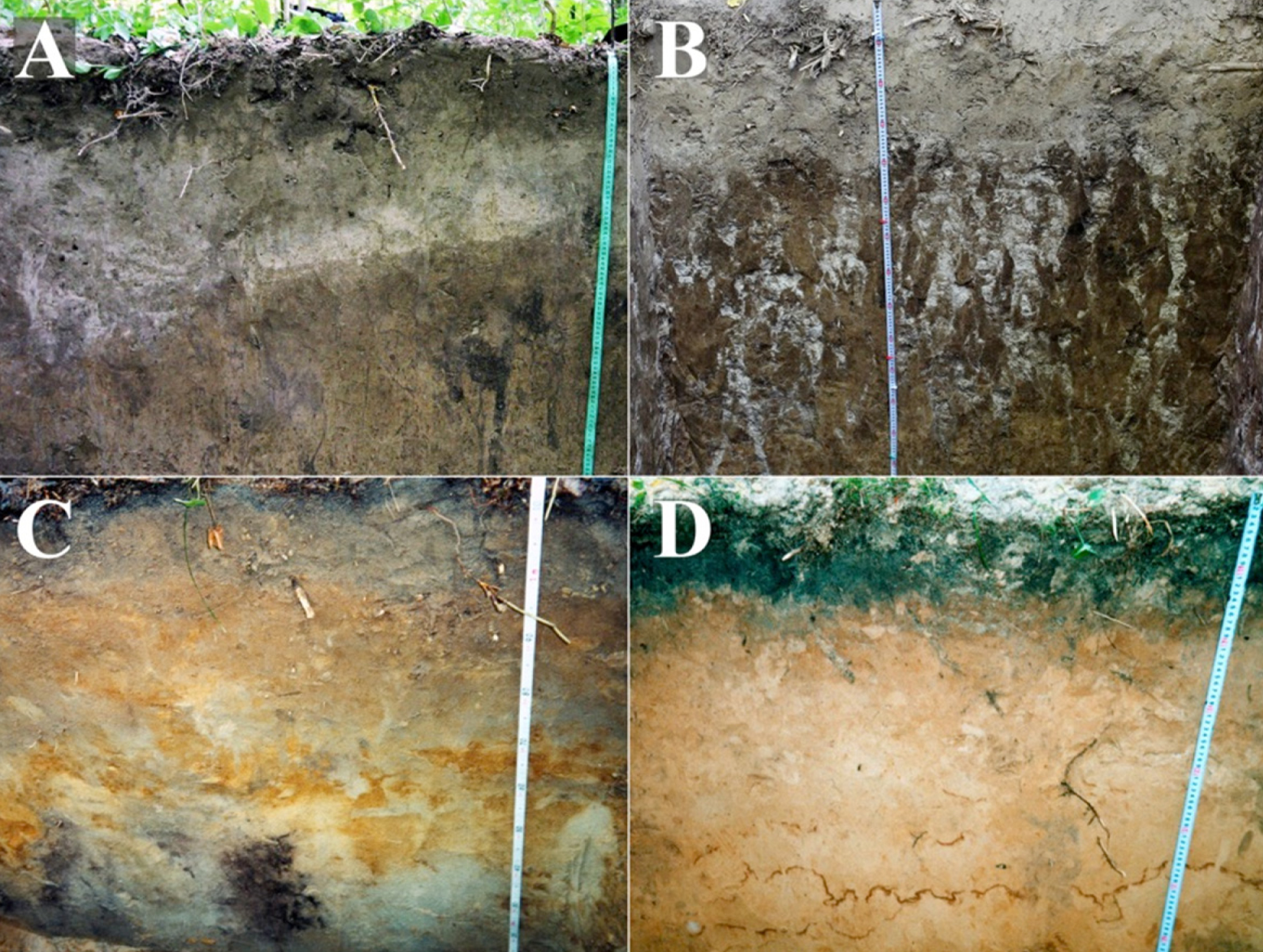
- Fig. 12. Soil profiles with patterns of treefall-related pedoturbations (Kaluga region): A – Albic Luvisol; B – Haplic Albeluvisol; C –Brunic Arenosols (Endogleyic Nechic); D – Brunic Arenosols (Nechic)
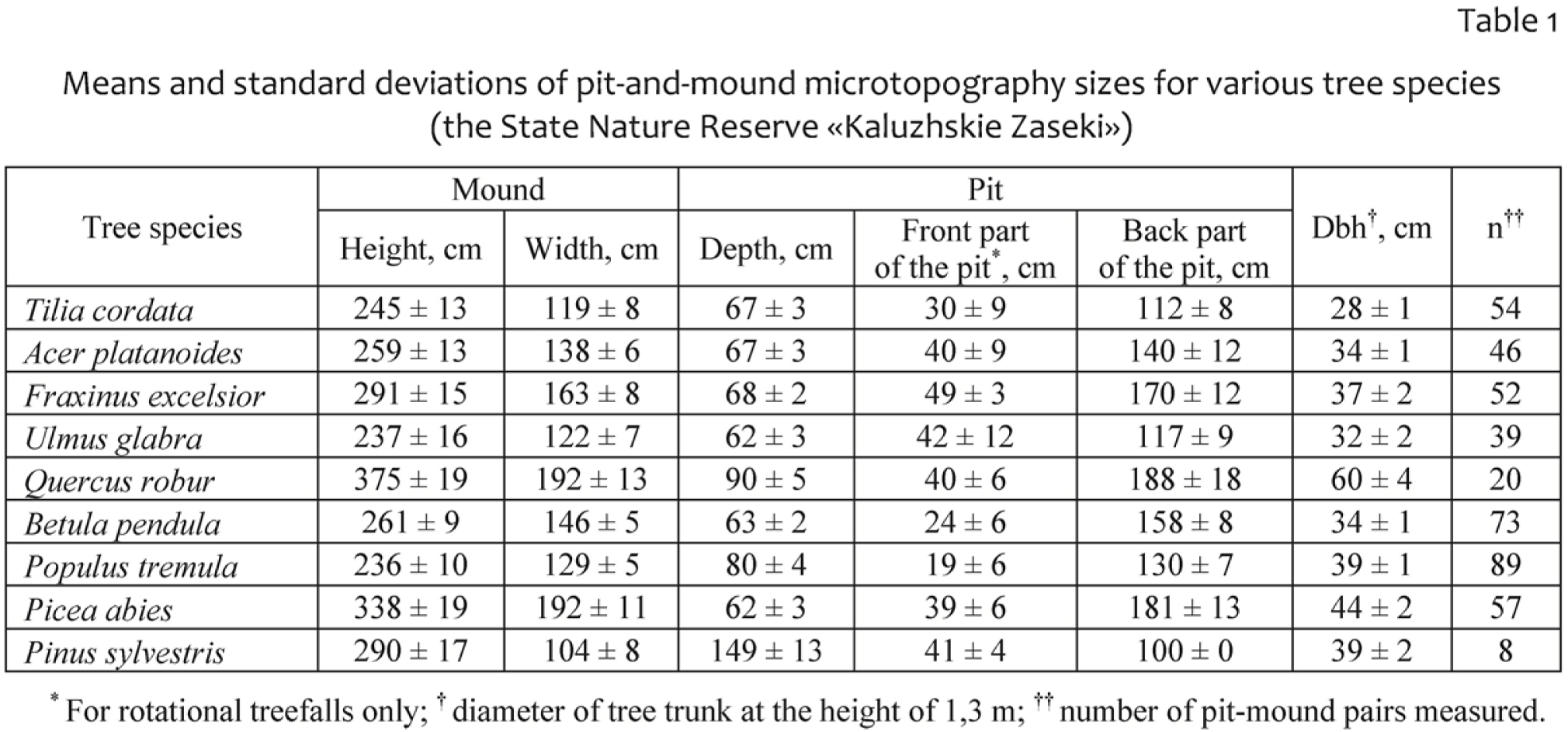
- Table 1 Means and standard deviations of pit-and-mound microtopography sizes for various tree species (the State Nature Reserve «Kaluzhskie Zaseki»)
Copyright © 2016 RJEE. THE ONLINE EDITION IS REGISTERED IN THE FEDERAL SERVICE FOR SUPERVISION OF COMMUNICATIONS, INFORMATION TECHNOLOGY, AND MASS MEDIA. REGISTRATION CERTIFICATE № FS 77 – 62950 from 04.09.2015.