


- Рис. 1. Удаленность точек пространства от водотоков, полученная с помощью инструмента «Euclidean distance»
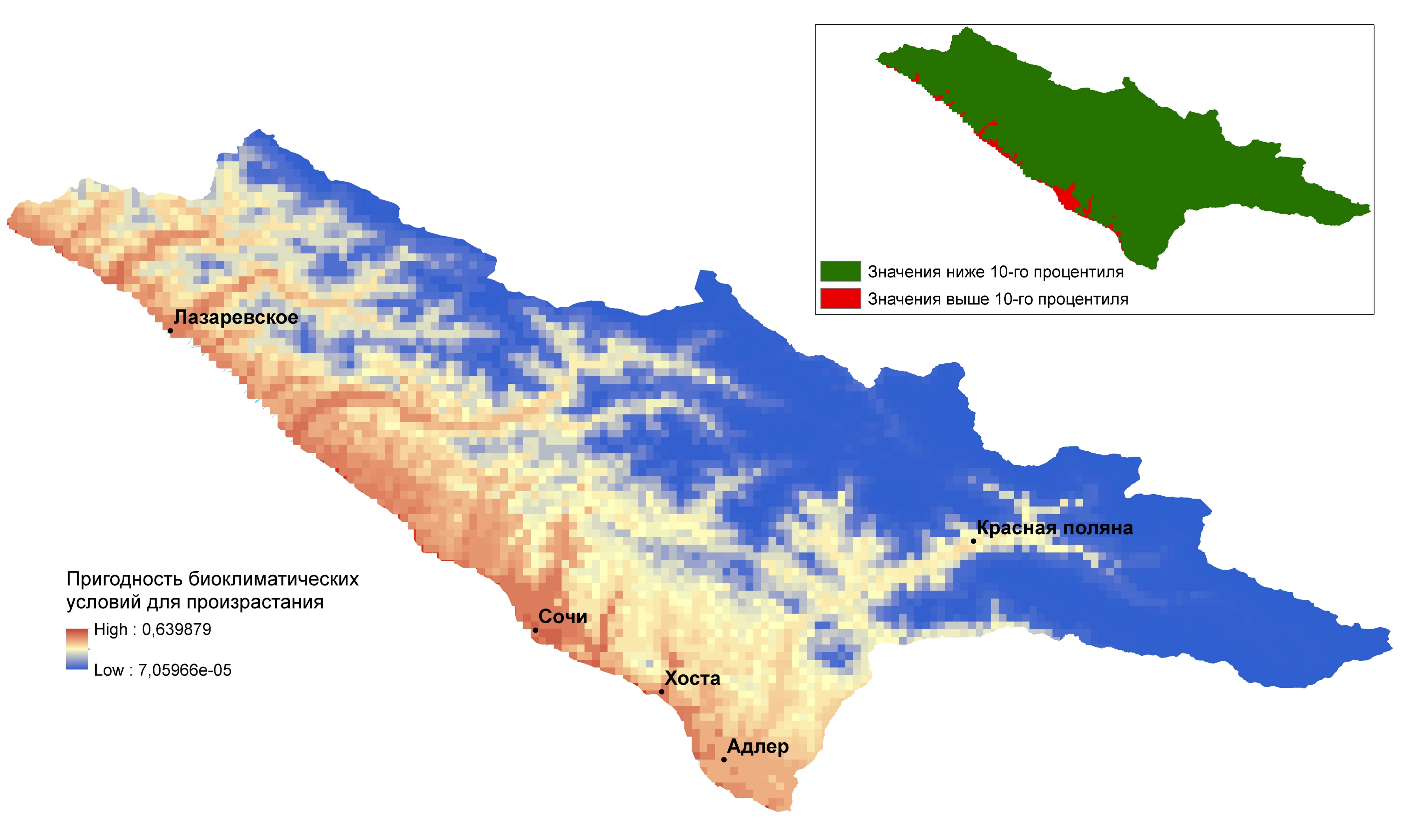
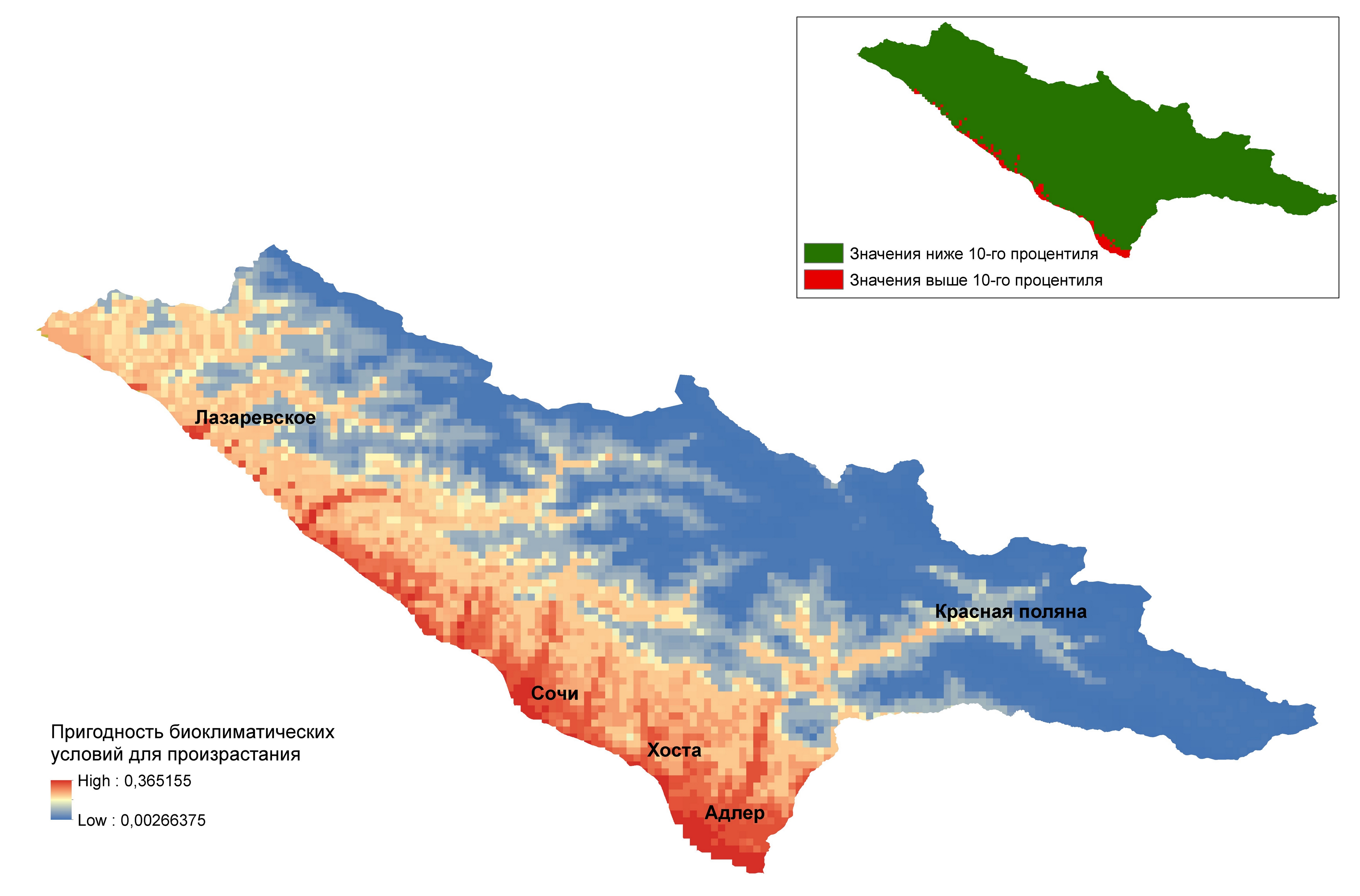
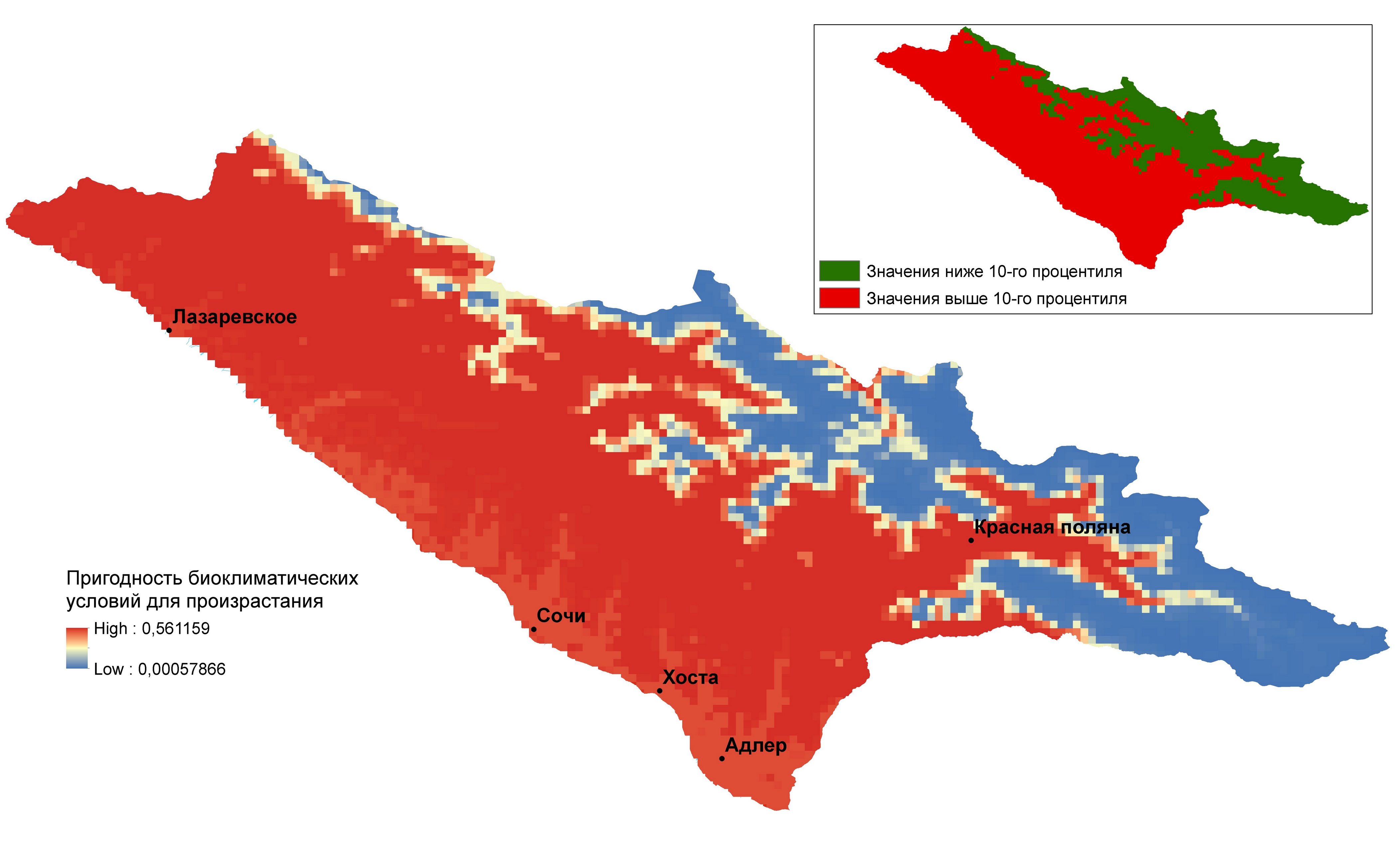
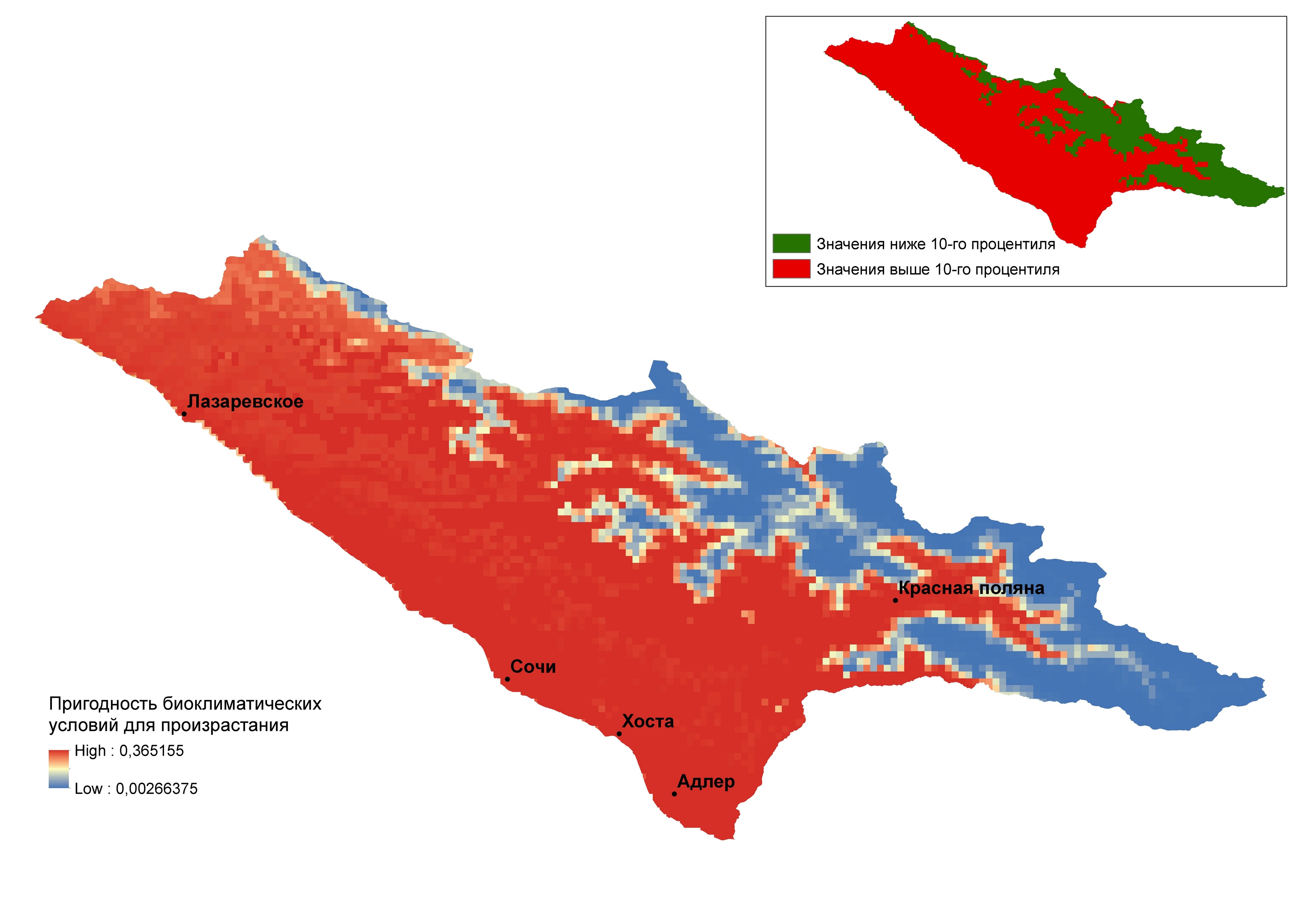
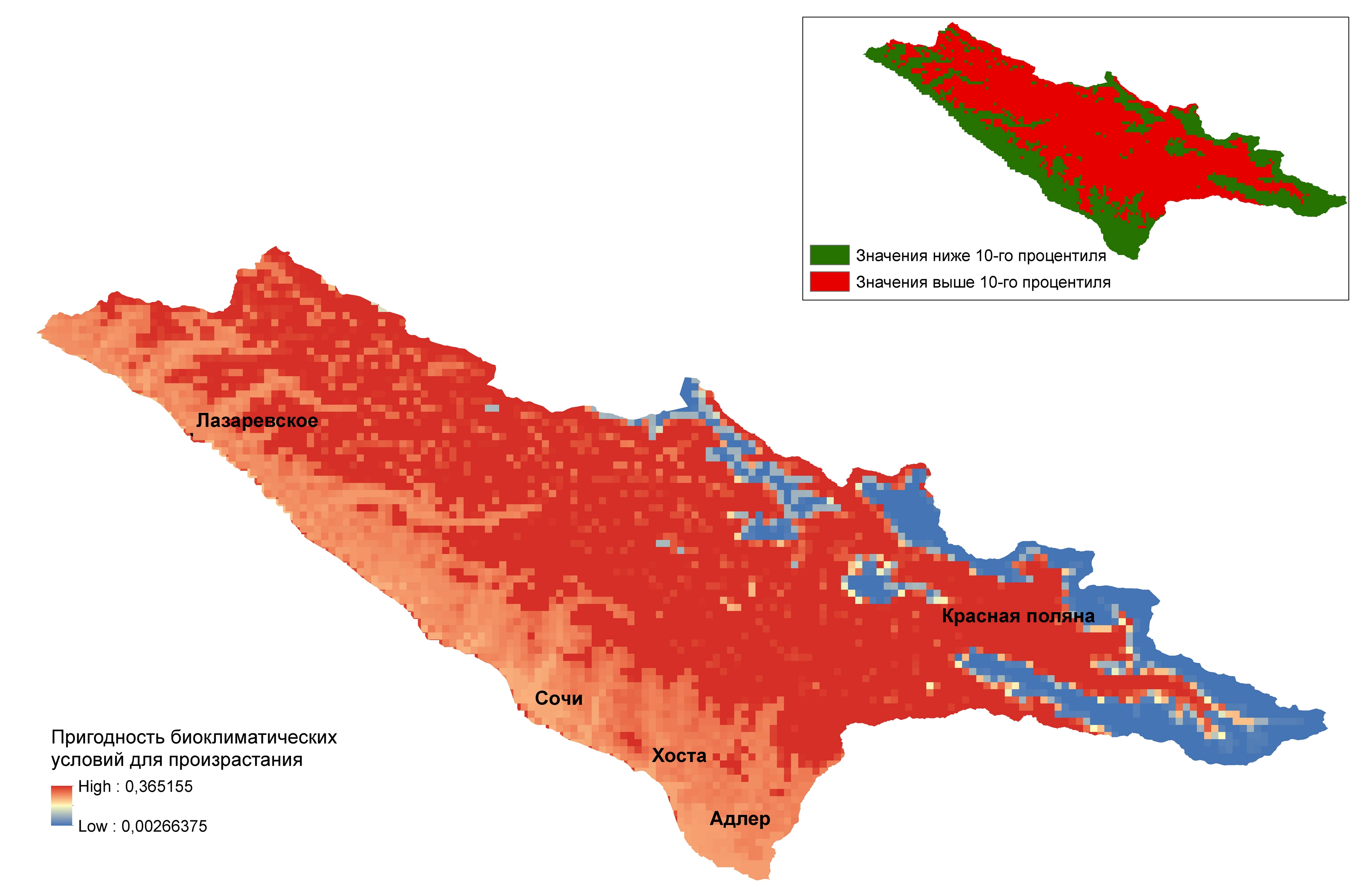
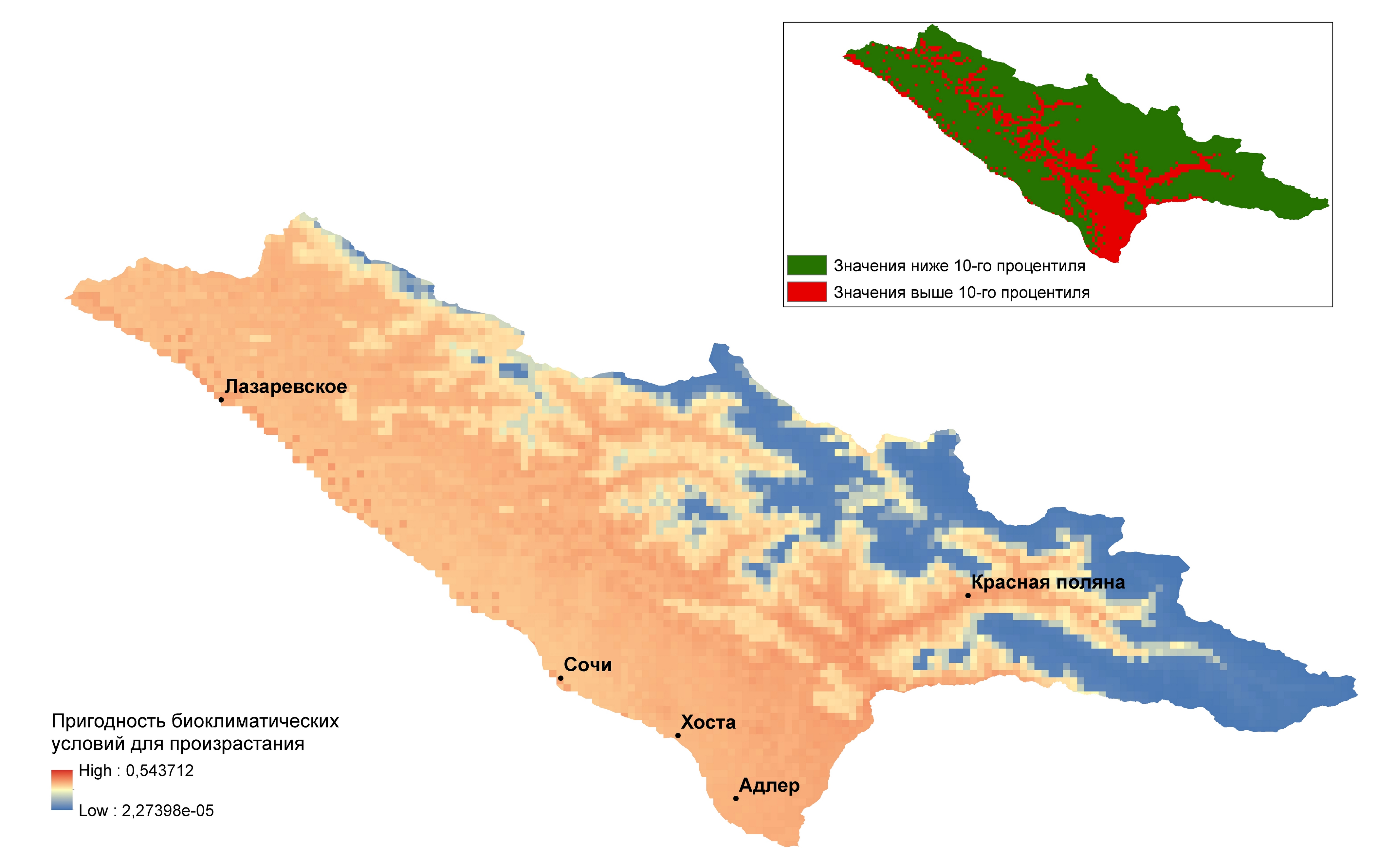
- Рис. 2. Пригодность биоклиматических условий для произрастания Paspalum dilatatum Poir (AUC 0,881). Наибольший вклад в построение модели вносят факторы: BIO1 – 24,4 % (коэффициент пермутации 9,8 %), BIO11 – 41,2 % (коэффициент пермутации 26,9 %)
- Рис. 3. Пригодность биоклиматических условий для произрастания Ligustrum lucidum W. T. Aiton (AUC 0.954). Наибольший вклад в построение модели вносят факторы: BIO1 – 17,5 % (коэффициент пермутации 3,8 %), BIO11 – 17,0 % (коэффициент пермутации – 24,6 %), BIO14 – 18,8 % (коэффициент пермутации 5,2 %)
- Рис. 4. Пригодность биоклиматических условий для произрастания Ailanthus altissima (Mill.) Swingle (AUC 0,847). Наибольший вклад в построение модели вносят факторы: BIO1 – 28,5 % (коэффициент пермутации 20,7 %), BIO11 – 13,2 % (коэффициент пермутации – 5,8 %), BIO19 – 22,1 % (коэффициент пермутации 18,2 %)
- Рис. 5. Пригодность биоклиматических условий для произрастания Phytolacca americana L. (AUC 0,935). Наибольший вклад в построение модели вносят факторы: BIO1 – 36,2 % (коэффициент пермутации 12,7 %), BIO19 – 14,7 % (коэффициент пермутации 8,5 %)
- Рис. 6. Пригодность биоклиматических условий для произрастания Buddleja davidii Franch. (AUC 0,837). Наибольший вклад в построение модели вносят факторы: BIO1 – 16,4 % (коэффициент пермутации 19,3 %), BIO11 – 20,1 % (коэффициент пермутации – 27,3 %), BIO14 – 17,8 % (коэффициент пермутации 0,4 %), BIO19 – 21,3 % (коэффициент пермутации 11,4 %)
- Рис. 7. Пригодность биоклиматических условий для произрастания Hemerocallis fulva L. (AUC 0,954). Наибольший вклад в построение модели вносят факторы: BIO1 – 25,1 % (коэффициент пермутации – 9,1 %), BIO14 – 31,2 % (коэффициент пермутации 2,1 %)
- Рис. 8. Пригодность биоклиматических условий для произрастания Microstegium vimineum (Trin.) A. Camus (AUC 0,990). Наибольший вклад в построение модели вносят факторы: BIO18 – 23,7 % (коэффициент пермутации 3,5 %), BIO14 – 18,9 % (коэффициент пермутации 1,8 %)
- Рис. 9. Пригодность биоклиматических условий для произрастания Physalis philadelphica Lam (AUC 0,9324). Наибольший вклад в построение модели вносит фактор BIO6 – 33,5 % (коэффициент пермутации 0,3 %)
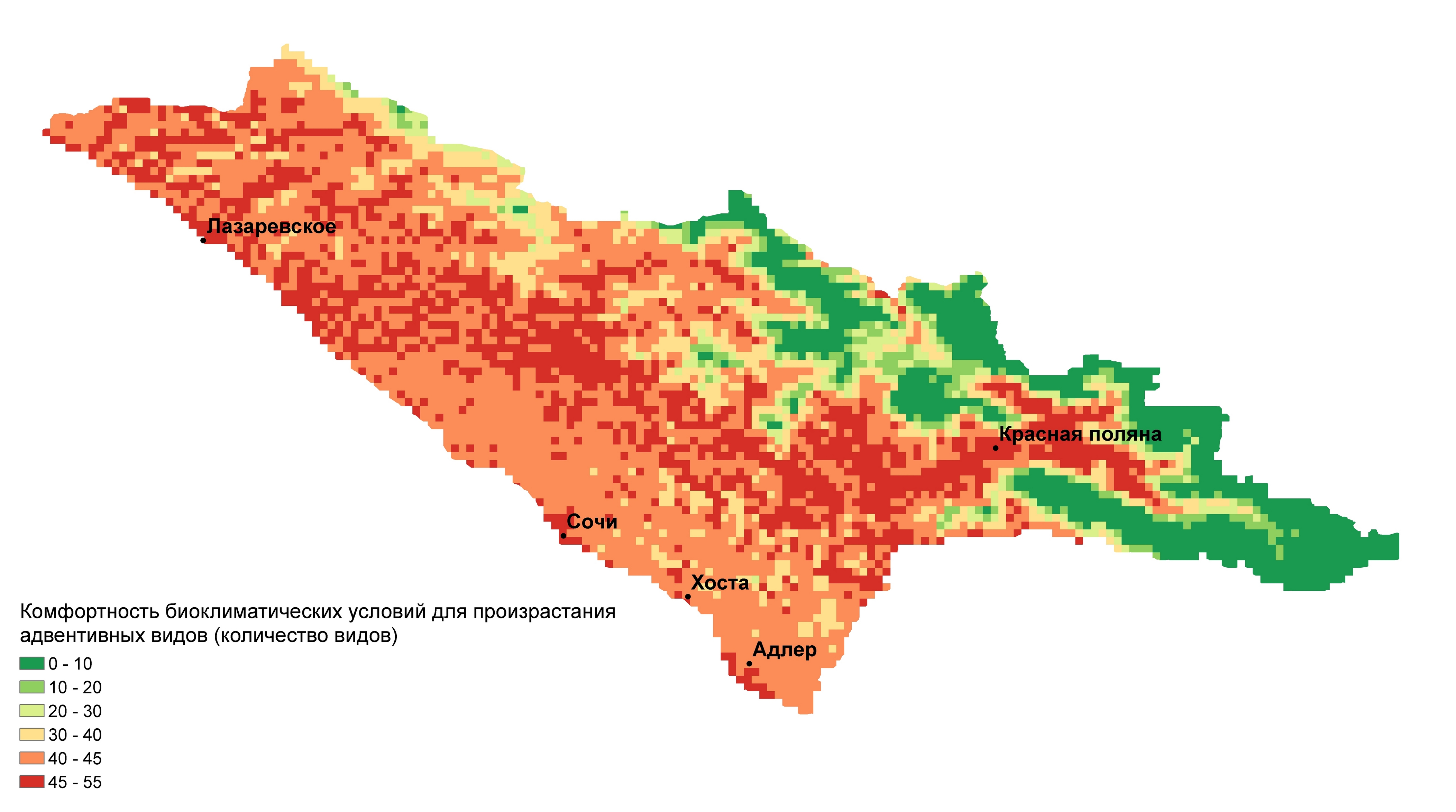
- Рис. 10. Уязвимость экосистем Большого Сочи к инвазиям чужеродных видов
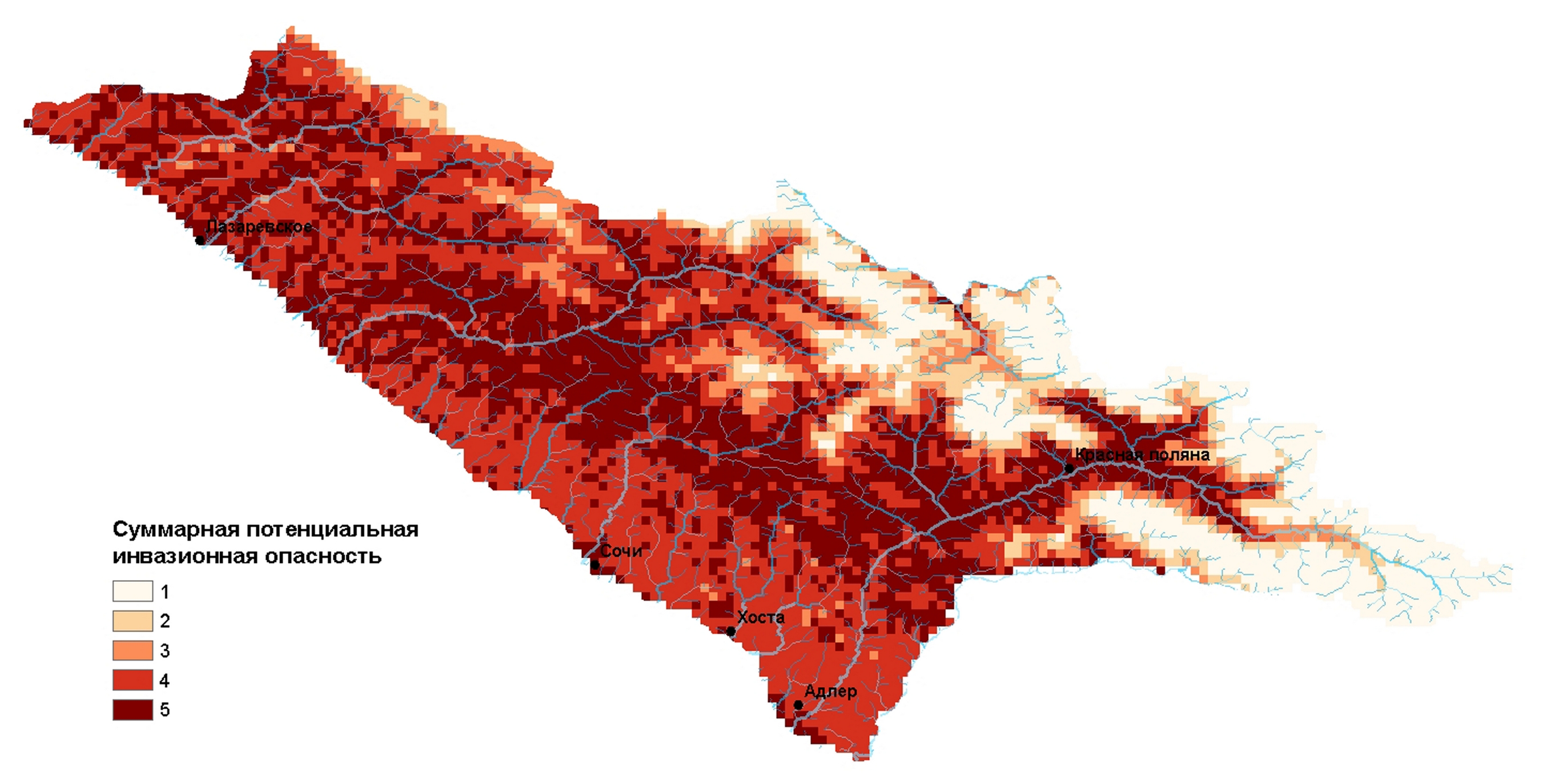
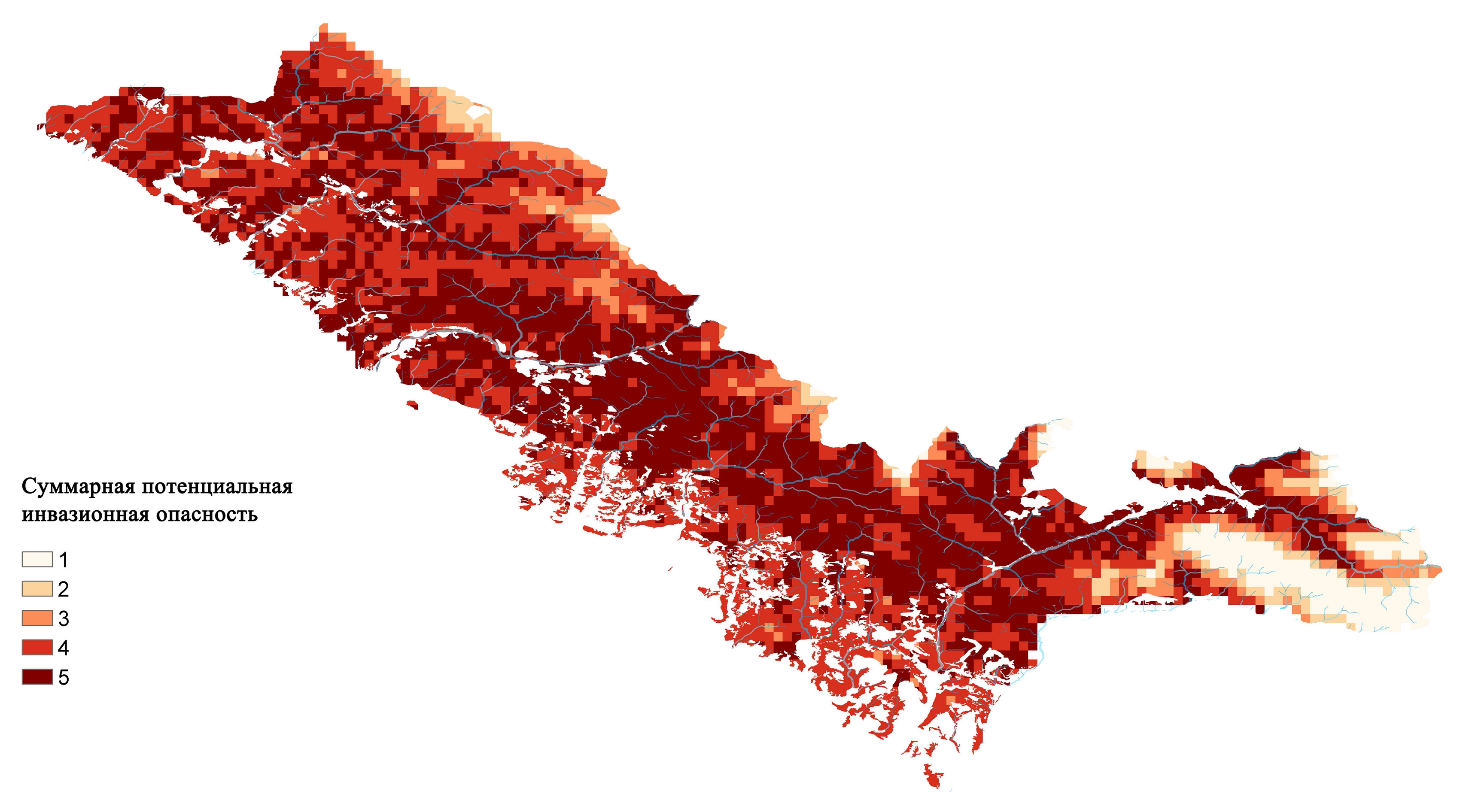
- Рис. 11 a. Районирование территории Большого Сочи (а) и Сочинского национального парка (б) по степени инвазионной опасности: 1 – крайне низкий уровень; 2 – низкий; 3 – средний; 4 – повышенный; 5 – высокий уровень
- Рис. 11 б. Районирование территории Большого Сочи (а) и Сочинского национального парка (б) по степени инвазионной опасности: 1 – крайне низкий уровень; 2 – низкий; 3 – средний; 4 – повышенный; 5 – высокий уровень



Copyright © 2016 RJEE. Сетевое издание зарегистрировано в Федеральной службе по надзору в сфере связи, информационных технологий и массовых коммуникаций. Свидетельство о регистрации Эл № ФС 77 - 62950 от 04 сентября 2015 г.