


A.Yu. Yaroshenko
Massive losses of forests around Moscow due to large-scale forest fires, sharp increase in eight-toothed dark beetles populations, hurricanes, snow breakage and other natural phenomena that took place over the recent years showed again that densely-populated regions of the country should have mixed and complex forest landscapesrestored, as they are potentially more resistant to stresses and disasters. Purely coniferous species, that had been primarily used for more than a hundred of years by forestry management,proved to be most vulnerable towards main dangers. Successful pine plantations of different ages were vulnerable to fires, successful old pine plantations or formed through intensive tending pure spruces – to eight-toothed dark beetles and storms. Large losses of pure coniferous forests around Moscow in 2009-2013 convinced even most skeptically-minded that it is worthwhile to plant mixed cultures that will include more resistant broad-leafed trees, especially oaks. Planting mixed forests in different patterns is not new experience in areas around Moscow: famous forester Karl Türmer, in the second half of the 19thcentury already practiced it, and over the later years quite a rich experience has been gathered. However, in recent decades this experience has largely been lost, and modern regulations in forestry management though do not directly prohibit mixed planting, but evidently show preference to monocultures. To change the situation, not only management had to be convinced in the benefits of growing mixed forests, but to create successful examples as well.
Greenpeace applied to the managements of several forestry stations in Moscow oblast, offering to work together on these projects. This idea attracted the management and specialists of Moscow State University of Forestry and its training forest station in Shchelkovo. Since that starting point, Greenpeace and several forestry stations had set up six experimental areas of mixed forest cultures – five in Shchelkovo training forest station (Fryanov, Ogudnevo, and Sverdlov forest farms) and one in Klin forest farm. In all cases site preparation included clear-cutting after the forest death due to eight-toothed dark beetles or windthrows. The soil was prepared by the forest stations or forest farms, they provided the planting material – spruce. Planting material of broad-leafed trees (oak, linden, elm, ash) and also some pines, were prepared by Greenpeace.
The first site of this project was started on May 7th, 2011 (3 hectares in zone 84 at Ogudnevo forest farm of Shchelkovo training forestry station). The results of planning on this site can be a good example of how such projects can be carried out and what results can be achieved over the first four years.
This original forest was damaged by the hurricane of 2010, and in 2011-2012 the clear-cutting was carried out and the cutting area was clean. The followingspring, severaldaysbeforeplantingthe furrows were ploughed. The planting material included: two- and three-year seedlings of English oak, two-year seedlings of Scots pine and European ash, and one-year seedlings of European white elm. Small quantities (a few score) of one-year seedlings of linden were also planted. All planting materials used in that area were prepared by Greenpeace. Unlikeother areas, spruce was not planted here. Local seeds grown in Moscow and Vladimir oblast were used for the planting material.
The planting density was 2,500 pieces per hectare. The mixing of species was as follows: one row – oak- pine-oak-pine; the next row – oak-ash-oak-elm. The mixing pattern could not be observed in all cases, because firstly, the micro-relief of the cutting in some places determined the composite forms of ploughed furrows (‘multiple crossing of parallel lines’) and secondly, the participation of a large number of people lead to the rows being mixed up. The planting was carried out using Kolesov’s planting iron and spades (for large seedlings of oak and elm the planting iron was not suitable as the root systems were very well developed). Around 600 people participated in planting. They divided into small teams of around ten people and each team had a leader, a trained Greenpeace volunteer. The groups were given sets of different seedlings, spades and Kolesov’s planting irons. Each group was to work on one or two rows. Latecomers planted either those rows that had been accidentally missed or joined the teams. This is how the planting went on May 7th, 2011 (photographer: Vadim Kantor)
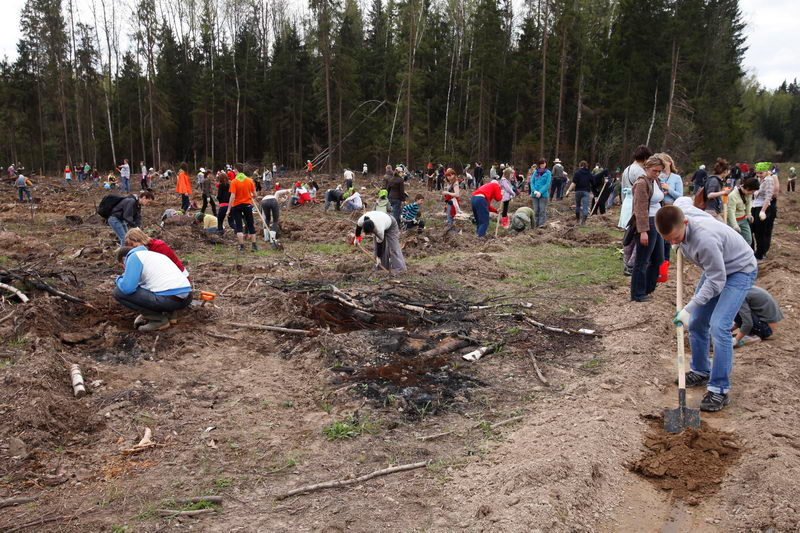
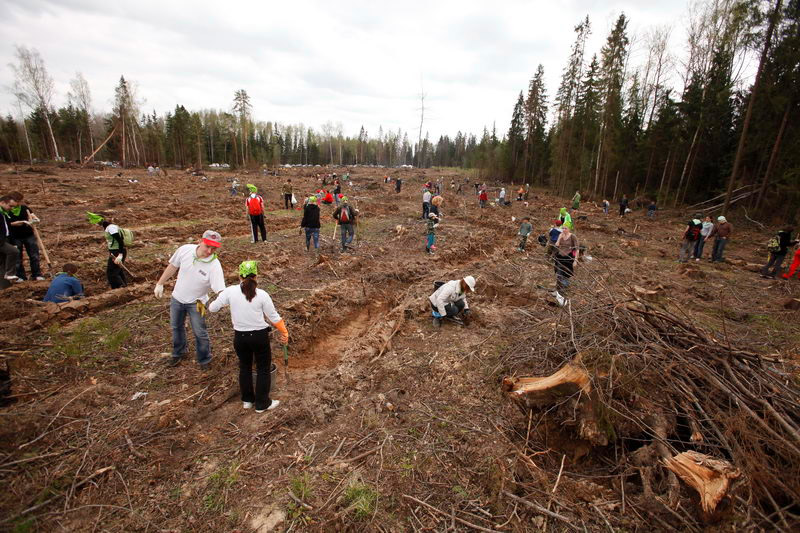
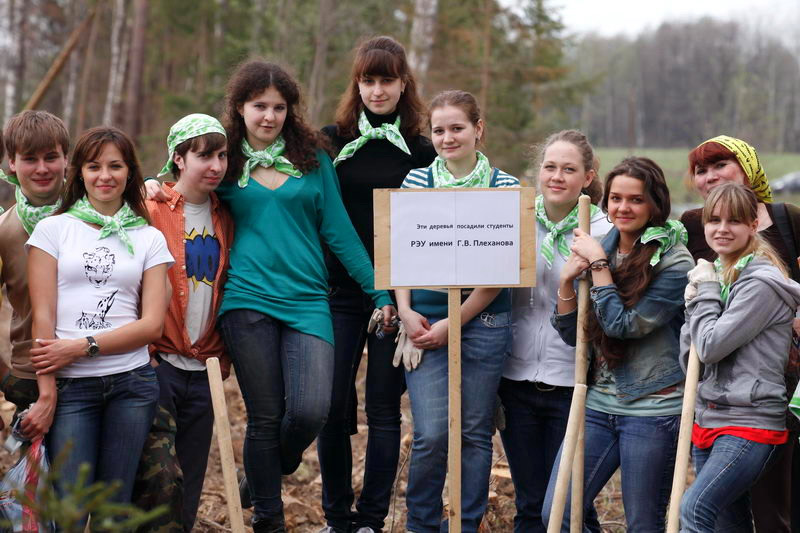
Some participants came and worked in teams – from universities, schools, organizations.
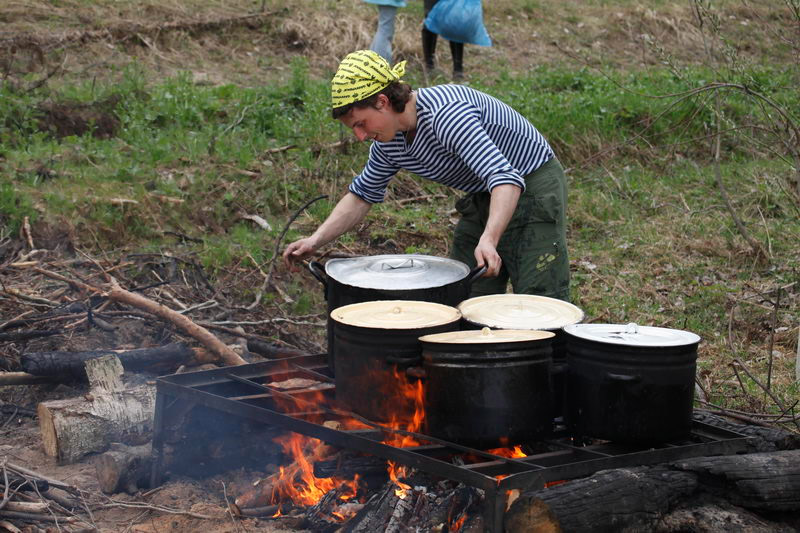
Preparing hot tea with sandwiches and biscuits.

Volunteers also collected rubbish from the area of the cutting and nearby places.
Tending the forest and its growth after the first season of growth
On checking the planted seedlings after the first season of growth, it was revealed that they establishedquite well. Here is what the site looked like in the year of planting (photographers: Svetlana Piskarevaand Tatiana Chalaya)

And this is how seedling of various tree species looked like when they were planted:
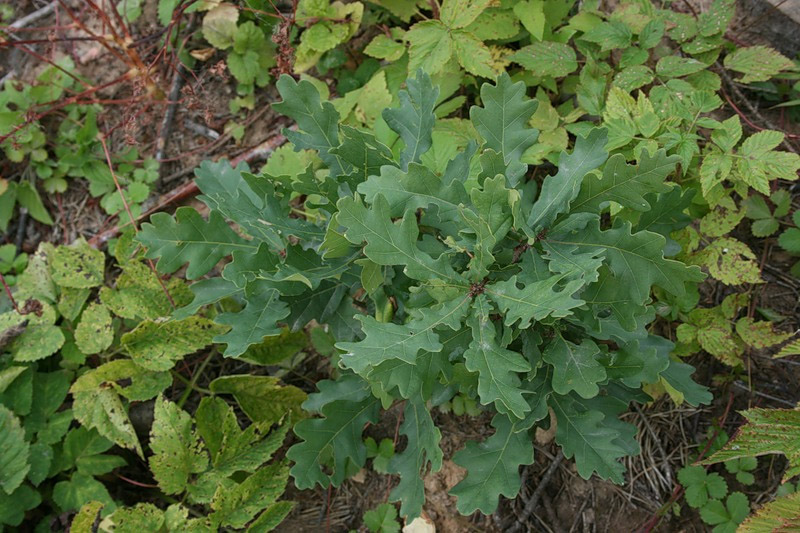
English oak
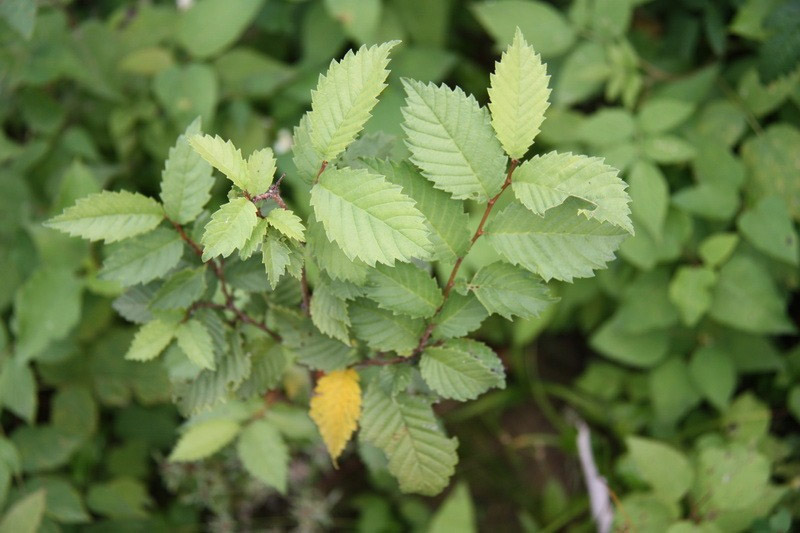
European white elm

European ash
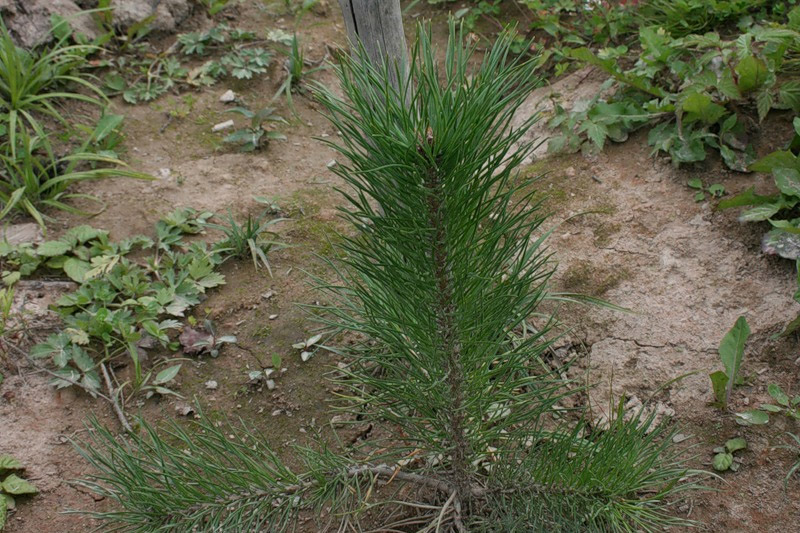
Scots pine
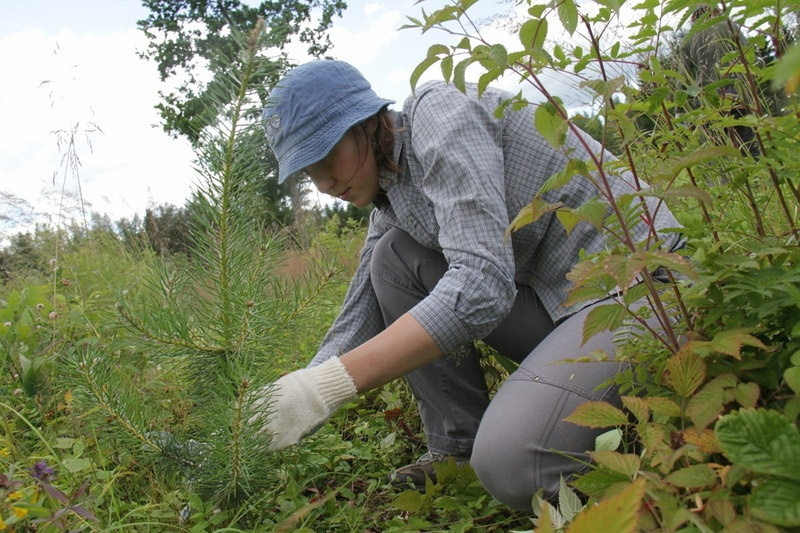
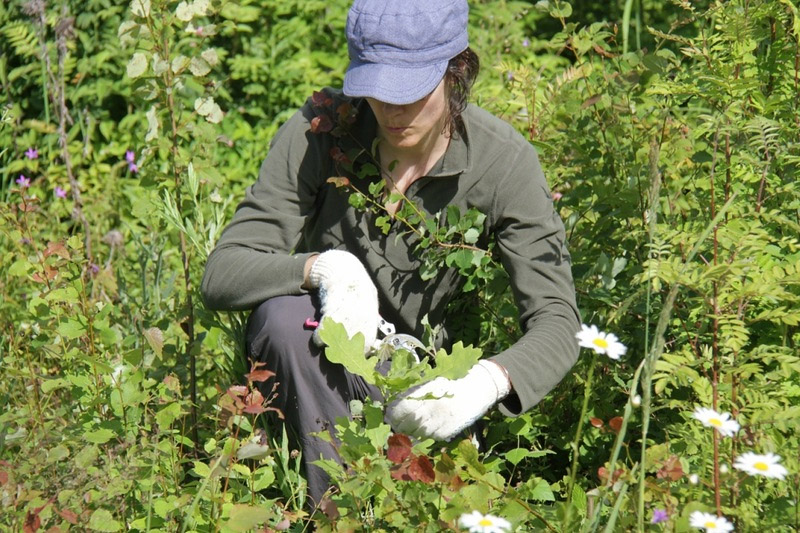
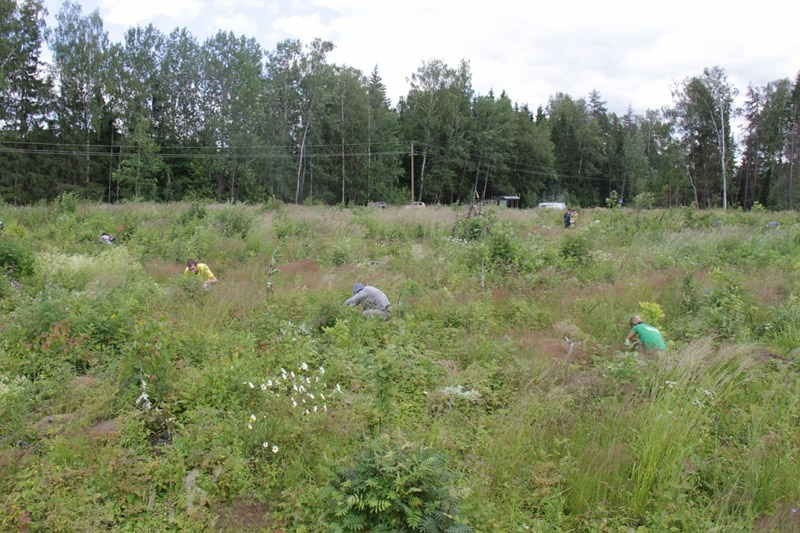
In the following ear it was necessary to tend the new forest–to remove fast growing aspen coppice and bushes around the planted tree seedlings. These measures were performed by forestry specialists and Greenpeace volunteers (around 20 people) in one day (June 30th, 2012). They did the job with simple garden clippers, cutting the growth at a meter distance around each seedling.
This is how it was done (here and further on the photographer: Maria Vasilneva)

Before tending
FORESTS DEVELOPMENTAFTER THREE SEASONS OF GROWTH
Followingthat the area was not tended, but at one site the forestry specialists took care of the planted trees. Yearly checks showed that without proper tending they cannot do well. The next measures are planned for 2016.After three seasons of growth the planted trees looked as follows:
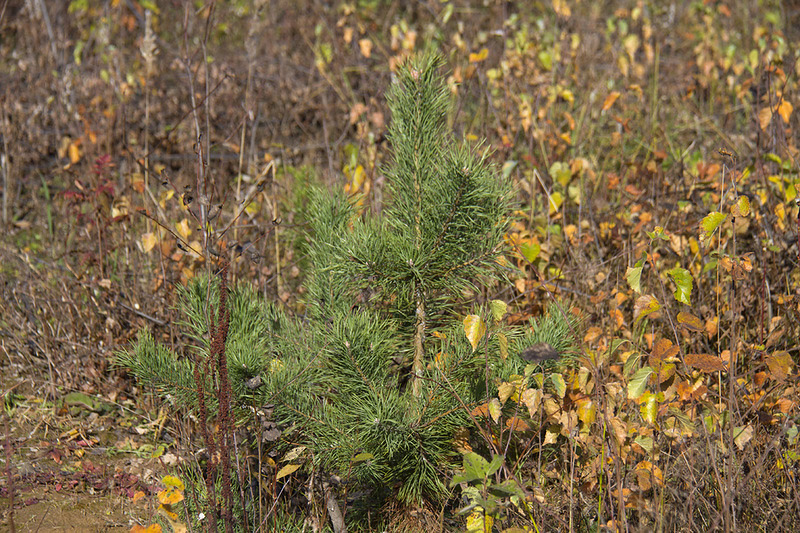
Scots pine
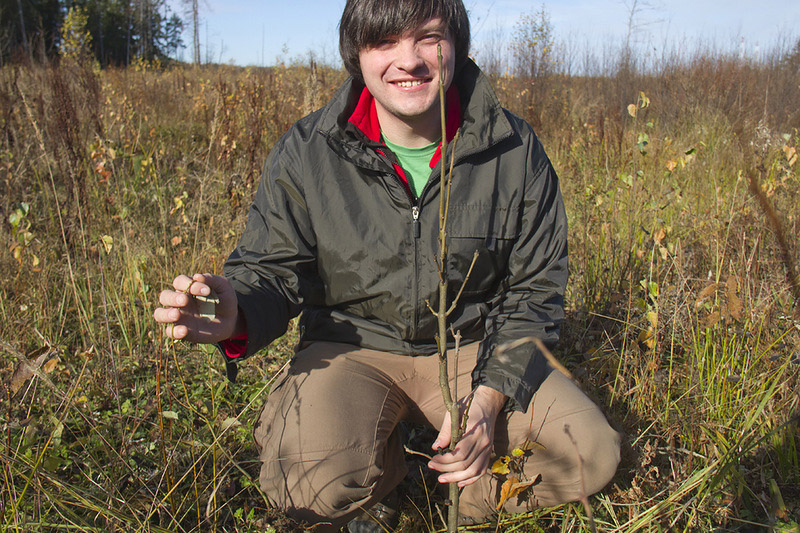
European ash

European white elm
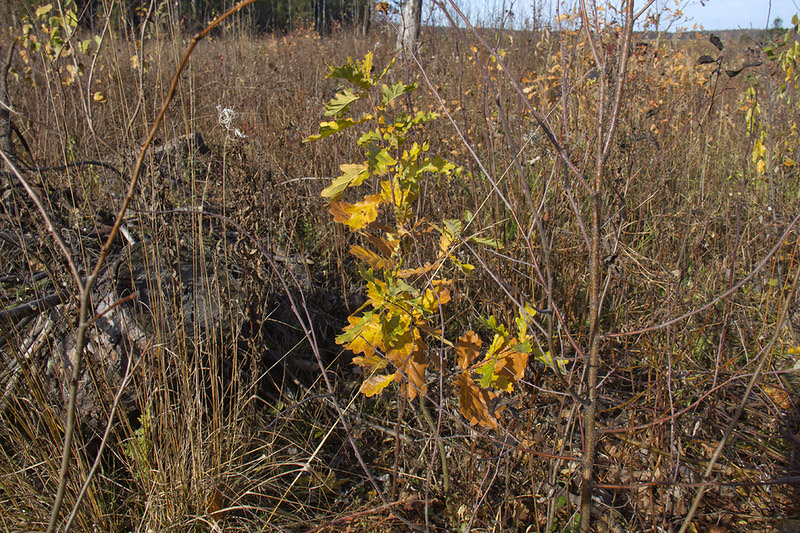
English oak
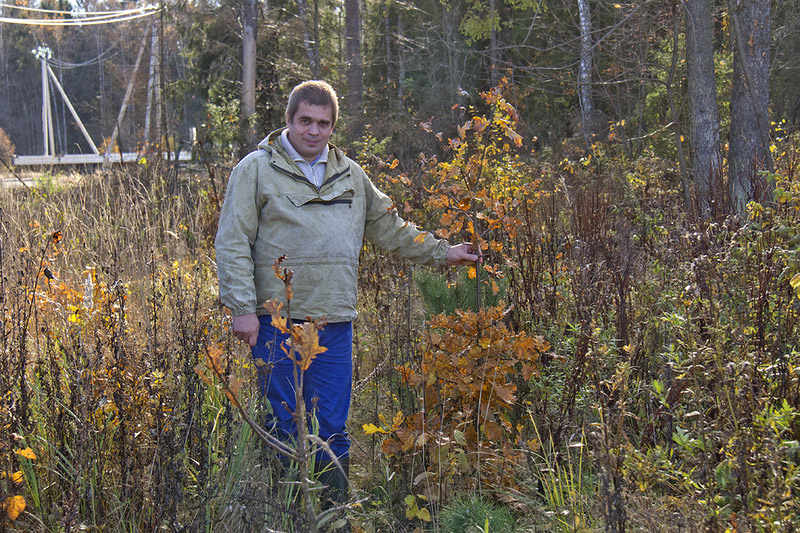
Also an English oak – one of the largest trees.
FORESTS DEVELOPMENT AFTER FOUR SEASONS OF GROWTH


English oak
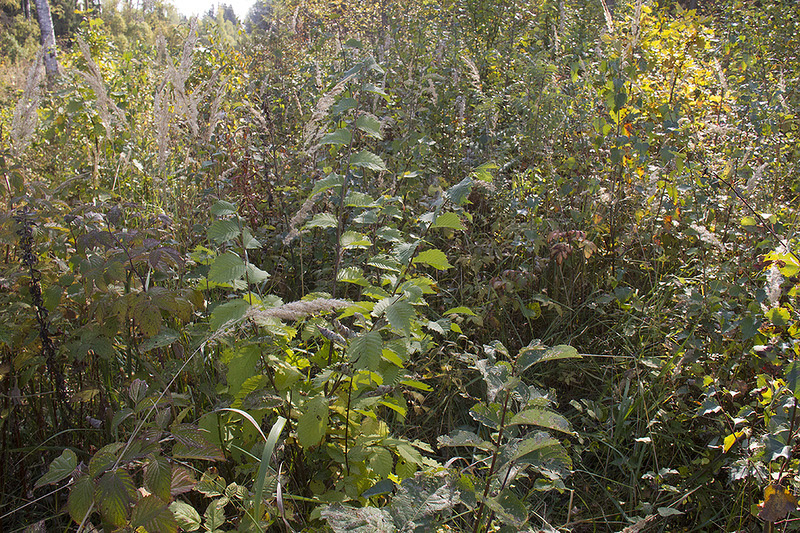
European white elm
CONCLUSIONS
In total the project of planting mixed forests was quite a success, though one can speak about final success only after the full closure of planted trees canopy and the development of plant composition, i.e. after fifteen-twenty years after planting.
Most successful was the planting of the English oak with big and well-developed three-year seedlings and some selected two-year seedlings. The trees that have grown from these seedlings, over the first five years steadily outgrew the canopy of fast-growing bushes, and now their main rival is the aspen. The range of oak trees in height and growth speed is quite big, and without one more measure – thinning (removal cutting) that is due in 2016, the sizable part of oaks can be stunted and outgrown.
The elm, linden and pine have also established quite well and developedsuccessfully, but they also, especially pine, need urgent tending.
Unfortunately, the ash is not doing as well – it was damaged severely from last-years droughts and the majority of it died, a lot of trees are significantly lower in height. Now the remaining part of the ash is still enough to develop in adult forest stand (after some score of years) one mixing unit – about 10% of the forest, but a lot depends on the favourable weather conditions in the next years.
By 2016, this area has to be thinned (removal cutting): large undergrowth, especially aspen, that interferes with the growth and development of target trees, birch trees in some parts, only some trees have to be left to develop a mixing unit in the future forest. After that the area can be left without close checks and tending for some years, without fear that fast-growing broad-leafed trees and bushes will dominate and stunt the growth of target trees.